In 2024, Lindsey felt inspired to create artwork that supports environmentalism by phasing out of using mediums that are toxic for the environment. Her mission is to maintain a carbon neutral artistic practice.
Coral Lungs
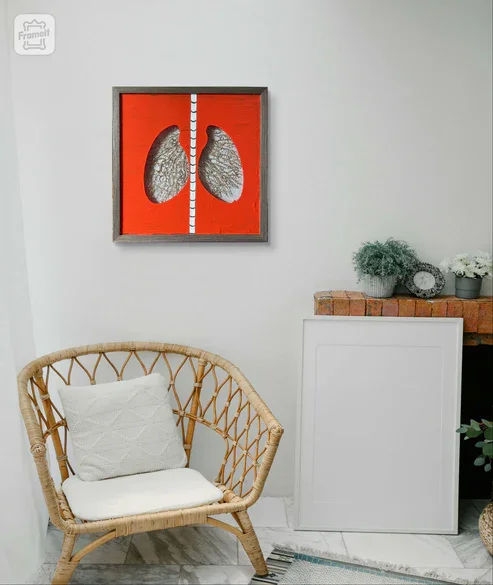
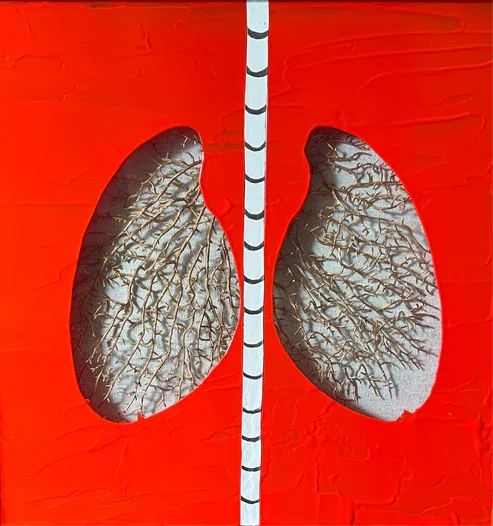
"Coral Lungs" is an acrylic painting on an up-cycled glass shadowbox. On the surface, most of the glass is covered in cadmium red paint. Except, there are two areas of negative space in the center that depict a pair of human lungs. Also, there is a vertical white stripe between the lungs that has metallic grey half-ellipses along it with each one separated an inch apart.
Size/Medium
18” x 18”, Acrylic on glass.
Year
2024
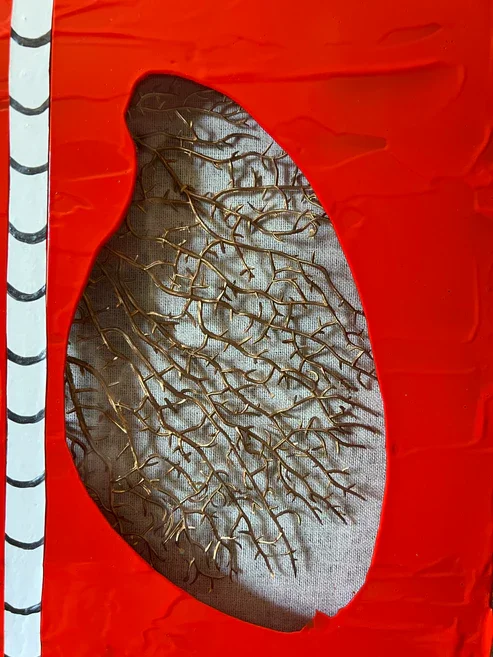
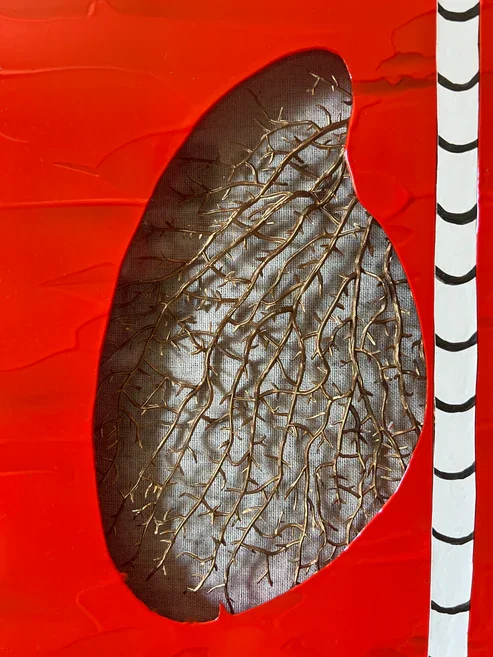
The two concepts of "Coral Lungs" are that human health depends on coral health and to be honest about the traces that human existence leaves behind on nature. Viewers are encouraged to explore their emotions while viewing this art piece, especially feelings of amusement, inquisition, and skepticism.
The negative space for the lungs reveals the object encased in the shadowbox, which is an artificial coral that is colored metallic rose gold. The branches of the coral are thin, thorny, and spread in a fan shape cascading downward. The overall texture of the painting is smooth yet uneven with obvious traces of human contact, which corresponds with the traits of the artificial coral.
Lungs
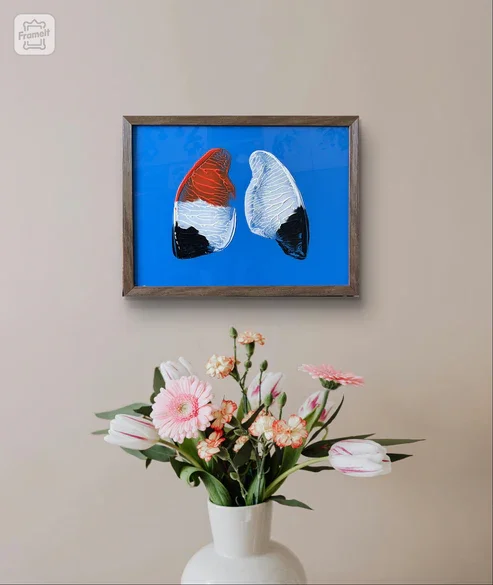
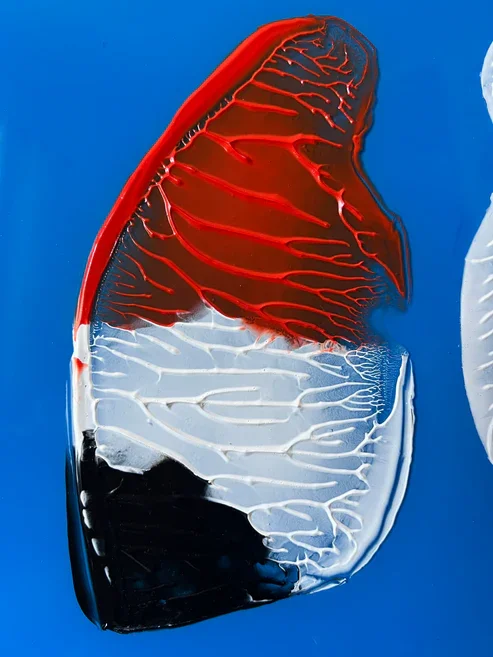
This is an acrylic painting on an up-cycled picture frame. The subject is a pair of transparent, tri-colored human lungs centered on an opaque blue background. The mood Lindsey was going for is medical. The artwork’s composition focuses the viewer’s attention on the subjects with precision and attention to detail around every curve.
Size/Medium
17” x 13”, Acrylic on glass.
Year
2024
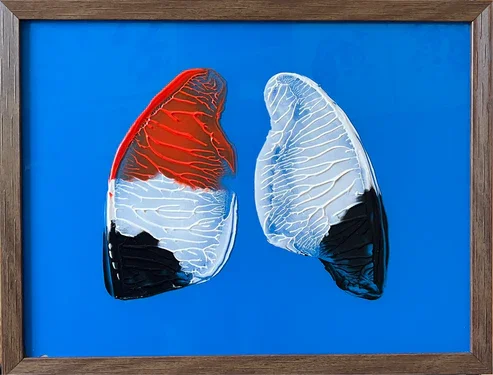
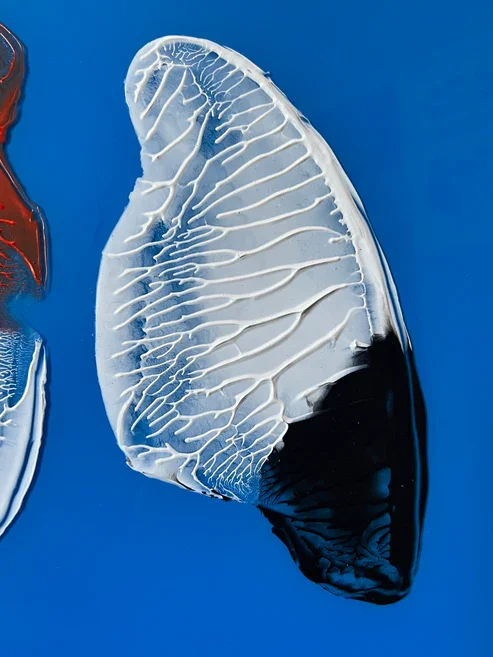
Lindsey created this painting to balance complexity with peace. Just like her other paintings, she intends “Lungs” to lead viewers to have a composed and rational mindset amidst life’s challenges.
The shapes and colors of the lungs are calming and purposeful. There is also a sense of seriousness about conveying the complexity of lungs. This is demonstrated in the asymmetrical shape of one lung and the vein-like pattern of both lungs.
Coral Grief
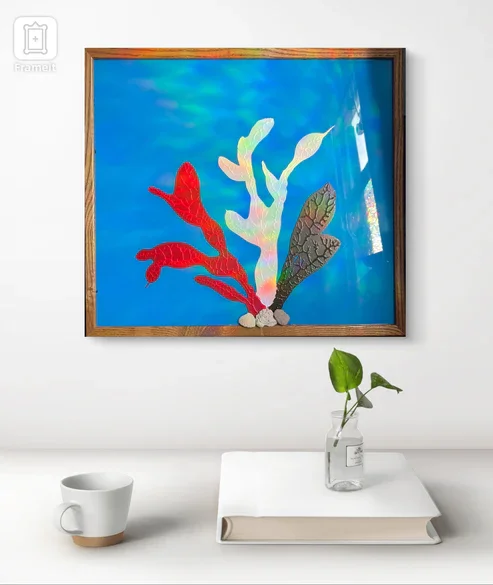
Size/Medium
20”x18” Acrylic and coral on glass.
Year
2024
Coral Grief is a mixed-media work that merges vibrant acrylic abstraction with poignant natural elements, presented on a repurposed picture frame with a glass surface and wooden border. The composition focuses on a three-branched abstract figure at the center, its vein-like texture evoking organic networks and lifelines. Each branch embodies a distinct state of coral health, captured in vivid, symbolic hues: the far-left branch radiates with the vitality of cadmium red, the middle branch is a stark and sterile white symbolizing coral bleaching, and the far-right branch is a somber brown, signifying decay and death.
At the base of this central motif, three fragments of dead coral are affixed to the glass, their intricate, skeletal forms grounding the abstract imagery in reality. The tactile quality of the coral contrasts sharply with the smooth acrylic surface, creating a dialogue between art and life. These harvested coral pieces serve as both a literal representation of loss and a tangible reminder of humanity’s intimate connection to the ocean’s ecosystems.
Lindsey conveys the urgent sad state of coral reefs, highlighting their role as both ecological treasures and casualties of environmental neglect. The interplay between the vibrant colors and the muted, natural tones of the coral creates a visual narrative of life, loss, and responsibility. The recycled picture frame underscores themes of renewal and transformation, reinforcing Lindsey’s call for creative solutions to combat ecological decline.
This piece is not just a visual statement but an invitation to dialogue. By intertwining scientific awareness with artistic expression, Lindsey intends to inspire conversations that can lead to tangible actions, advocating for the preservation and restoration of coral reefs as a critical step in addressing the global environmental crisis.