Since 2024, Lindsey has been dedicated to creating artwork that supports environmentalism. Her method is to phase out of using mediums that are toxic for the environment. Her mission is to maintain a carbon neutral artistic practice.
The Statue of Liberty

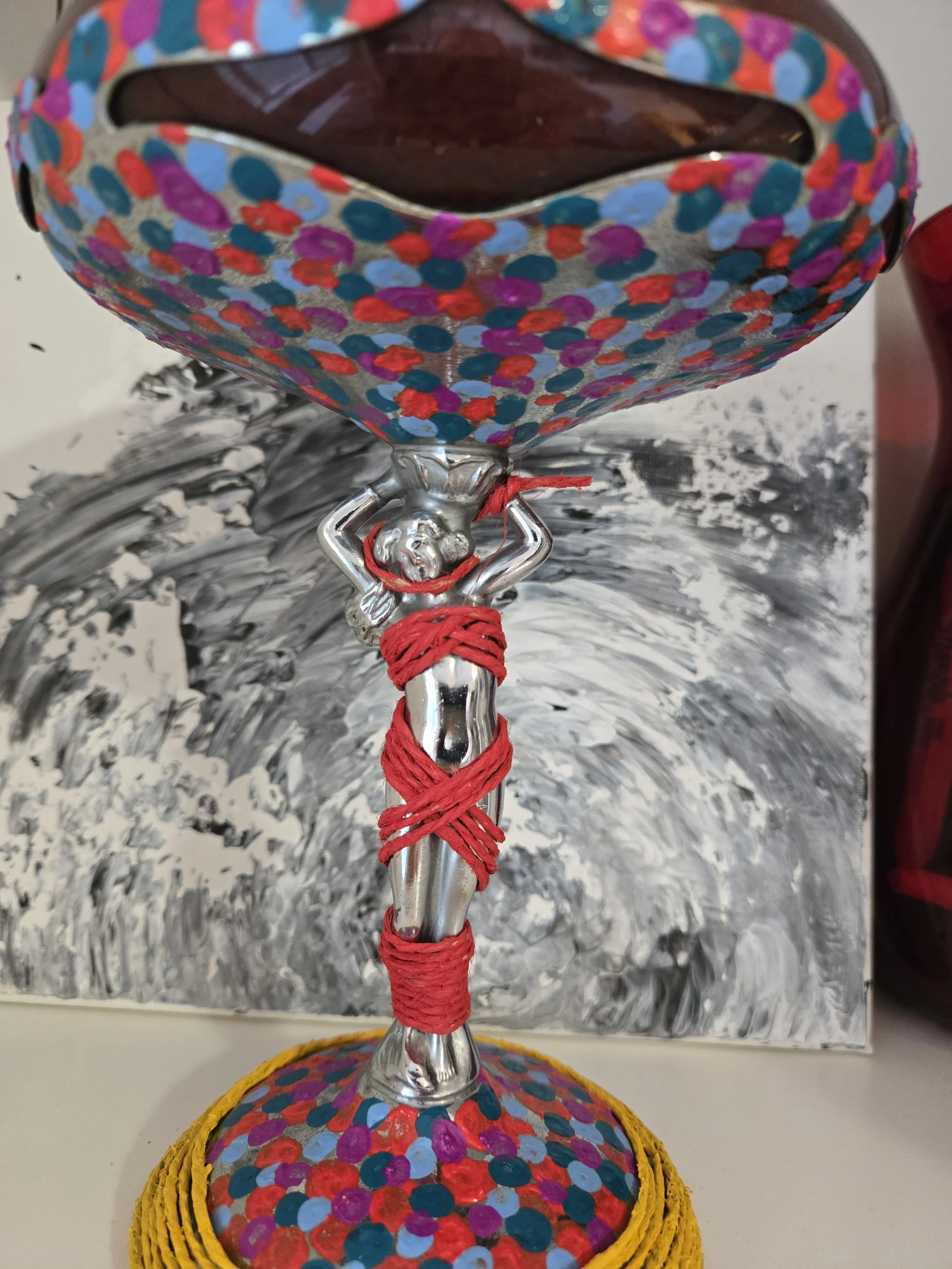
This mixed-media sculpture incorporates personal and environmental materials Lindsey gathered in New Jersey, including a cup from her late grandmother, a pocket knife from her late grandfather, bathroom tweezers, half a pound of Spring Lake Beach sand, hand painted yellow and red string, and aged acrylic paint.
Medium
Cup, string, aged acrylic paint, and organic varnish.
Year
2025
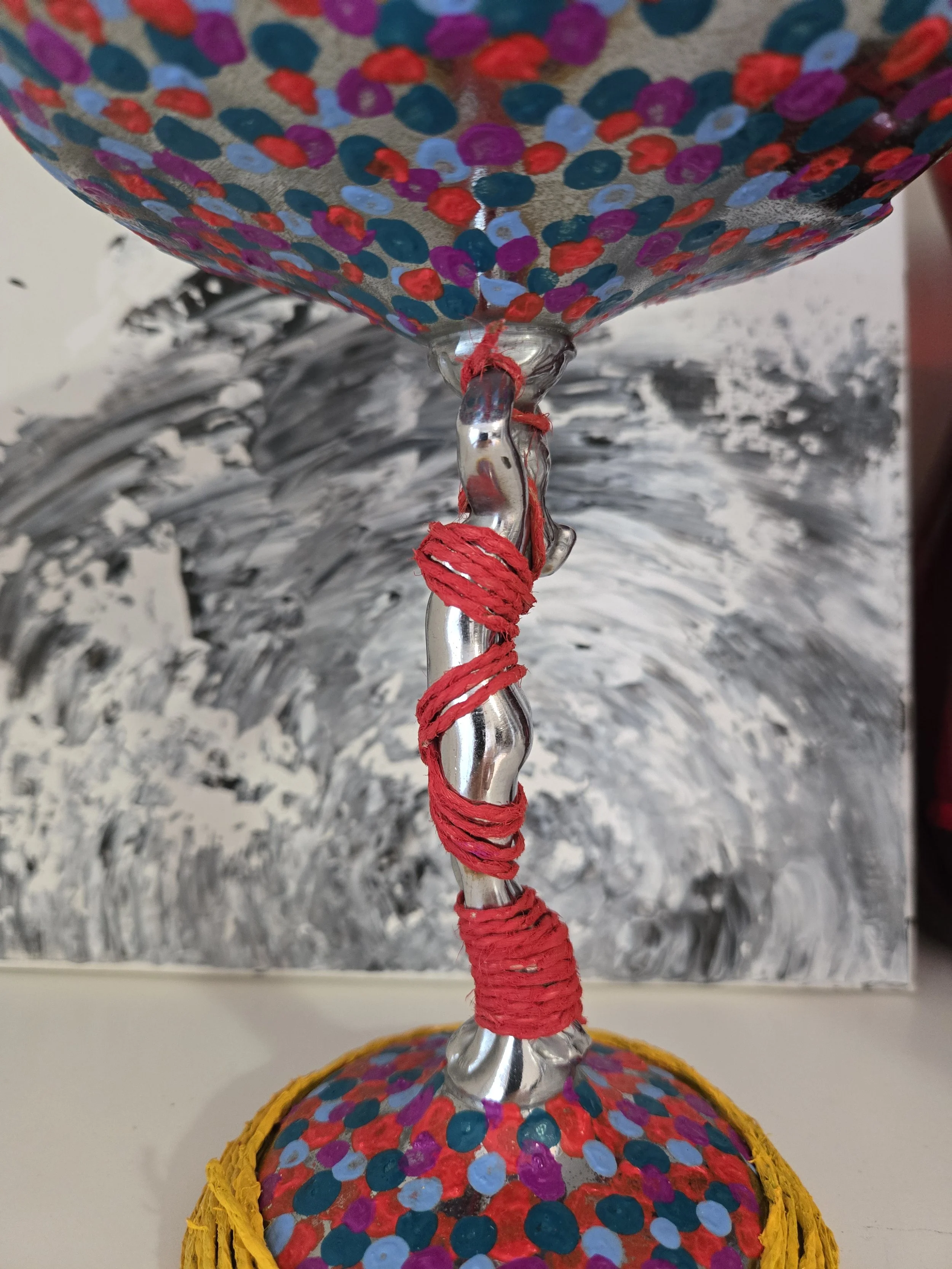
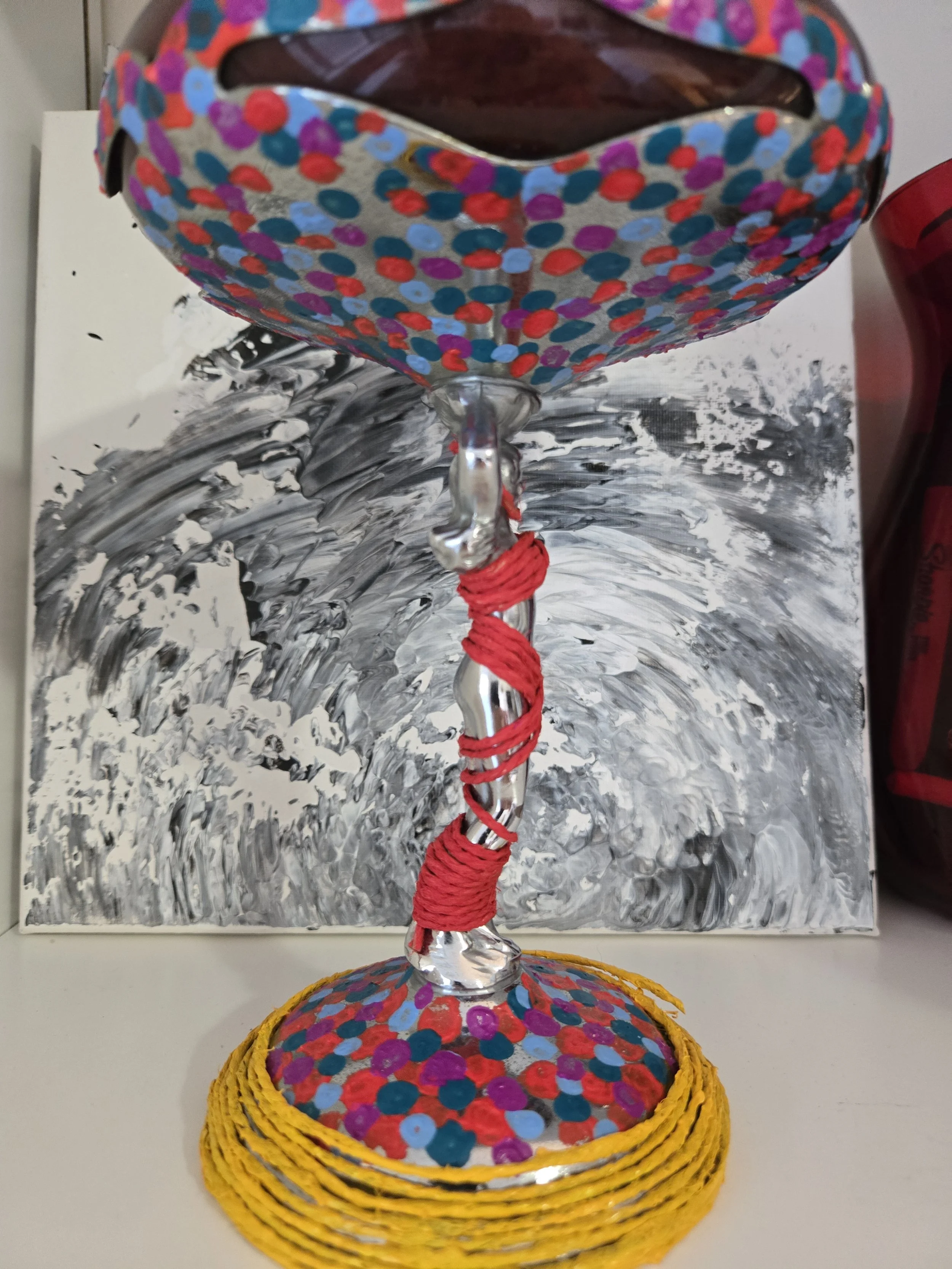
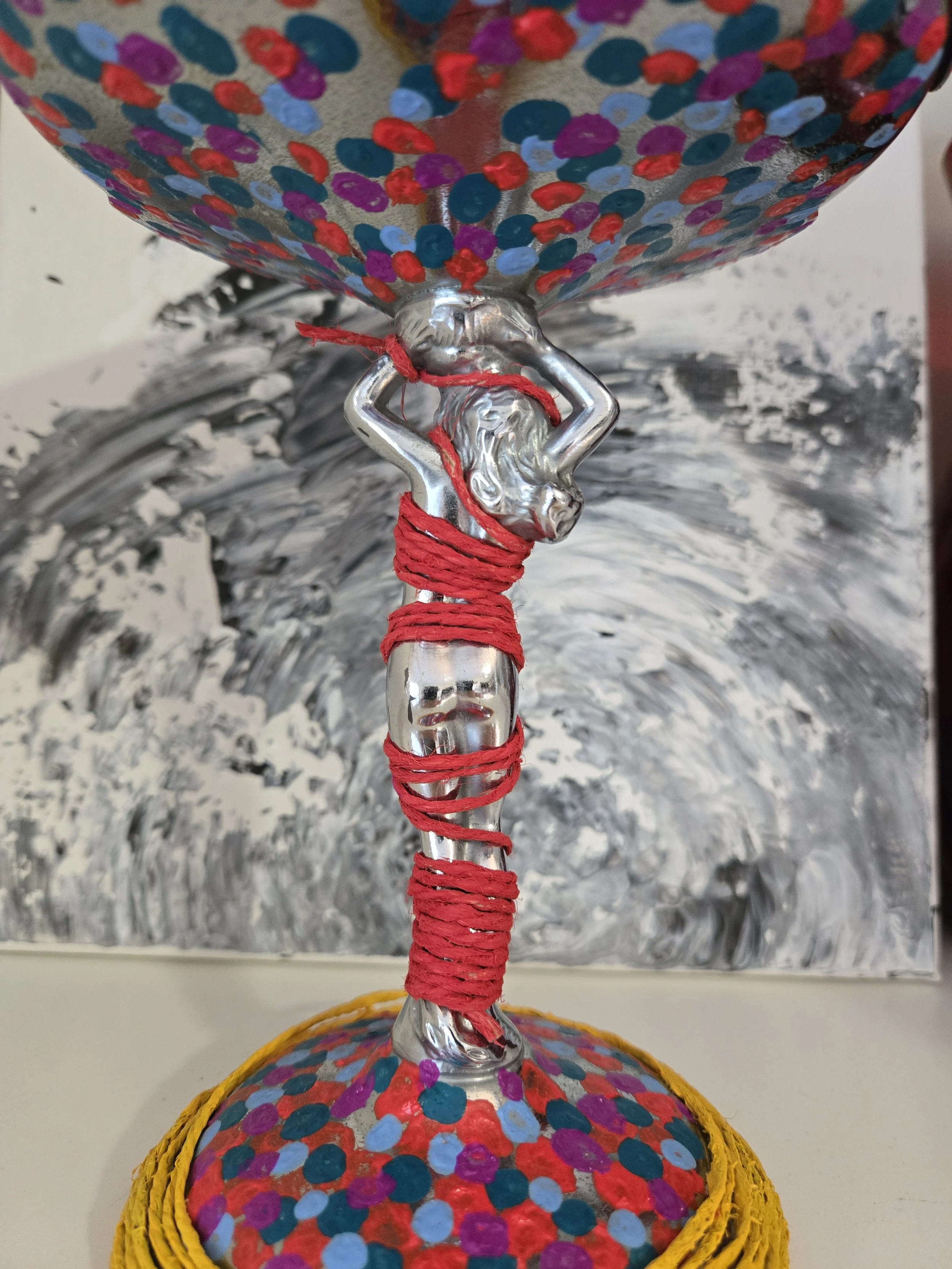
The transparent purple cup with a chrome body—painted with dots of crimson red, powder blue, navy, and purplish red to symbolize the U.S. population—is evenly filled to the brim with sand. Atop the sand, a pocket knife and tweezers form a triangle, while a feminine figure is bound with red string from wrists to ankles, representing power under tension. Yellow string, symbolizing hope, encircles the base with one loose end, suggesting potential unraveling.
The work remains “living” through its movable elements: loose sand, loose string, and accessible tools. Through this, Lindsey is criticizing the U.S culture’s pattern of using masking power with beauty, proposing liberty as something contingent on how resources are wielded.
Sacrifice
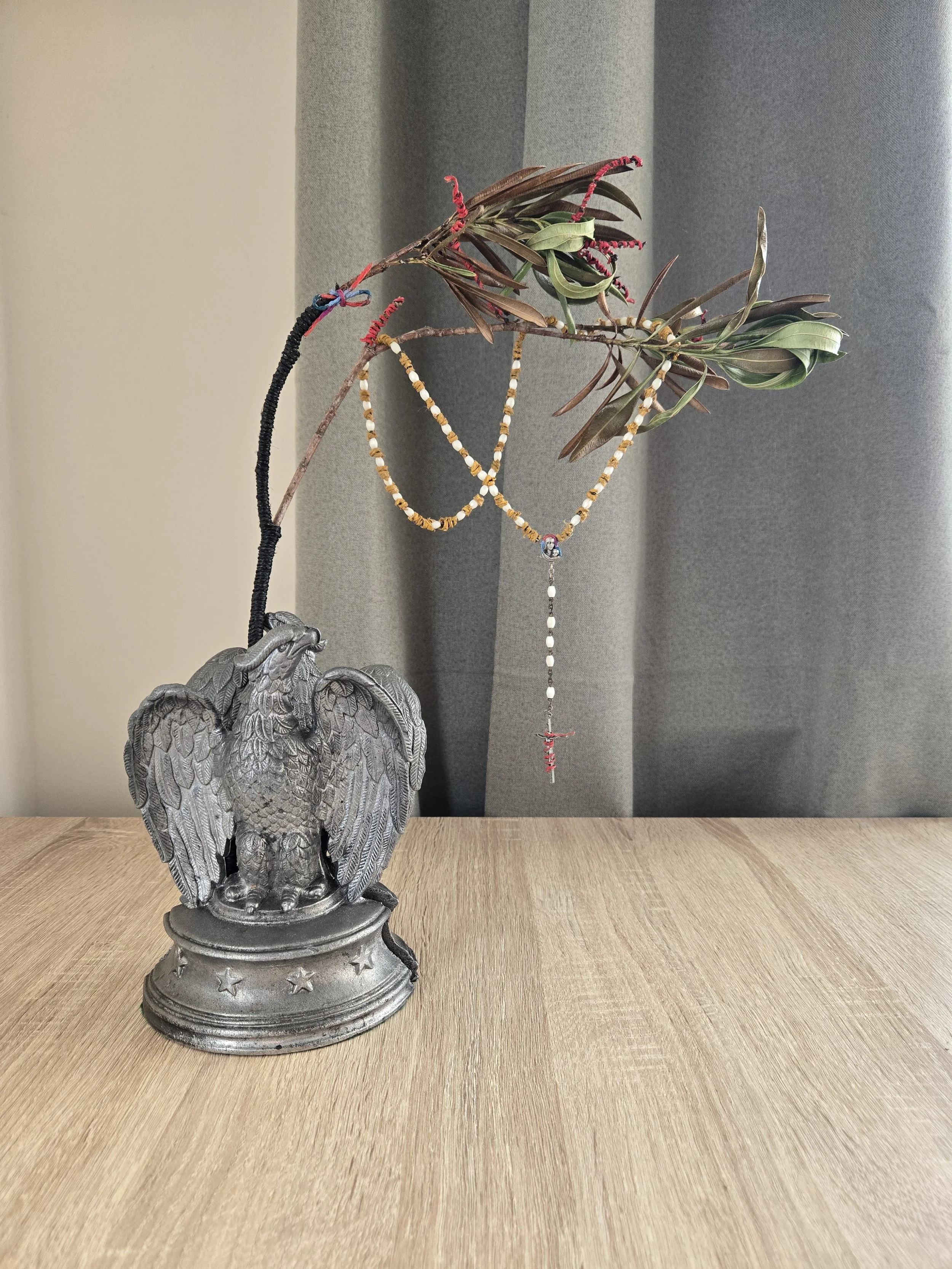
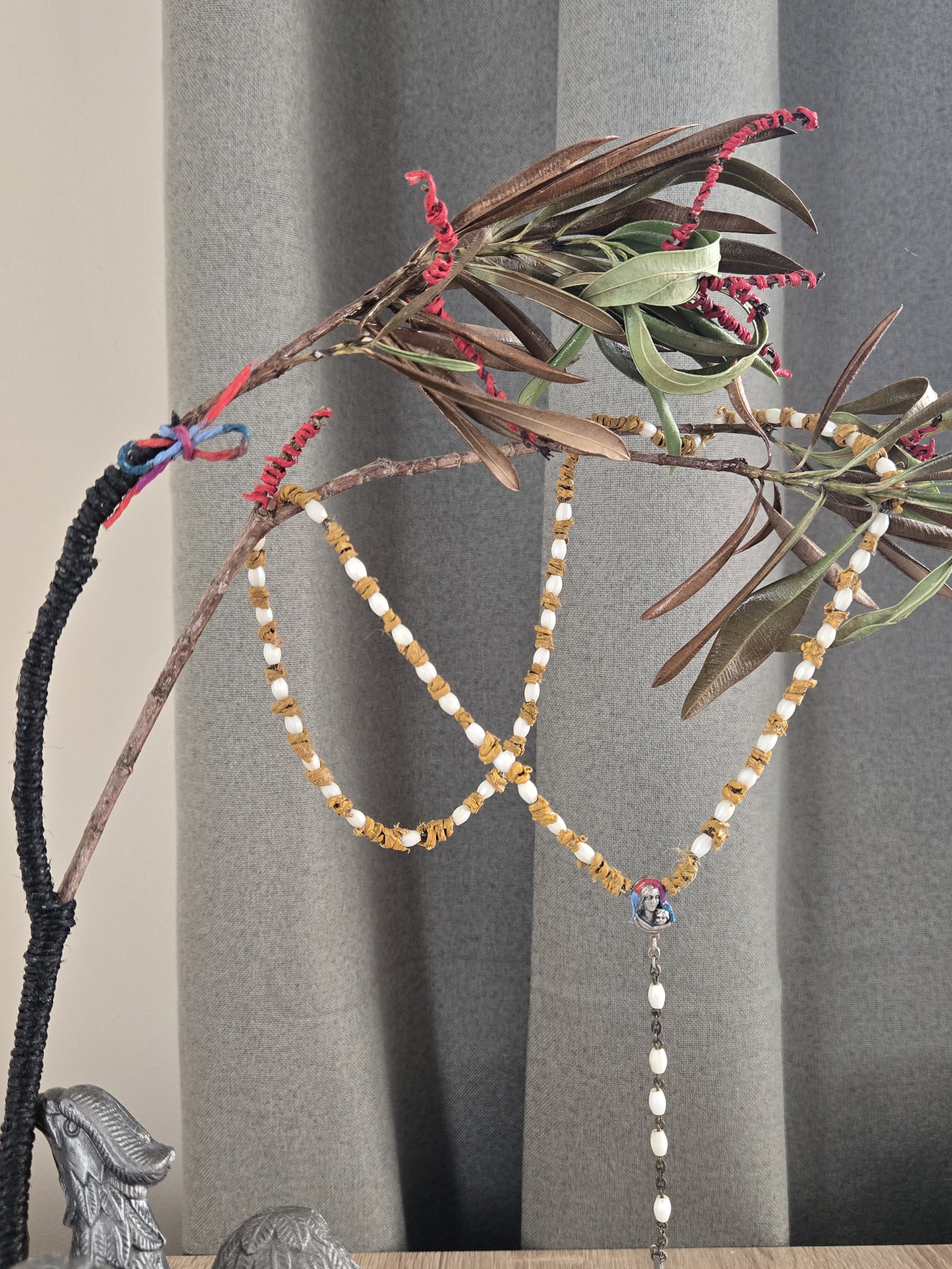
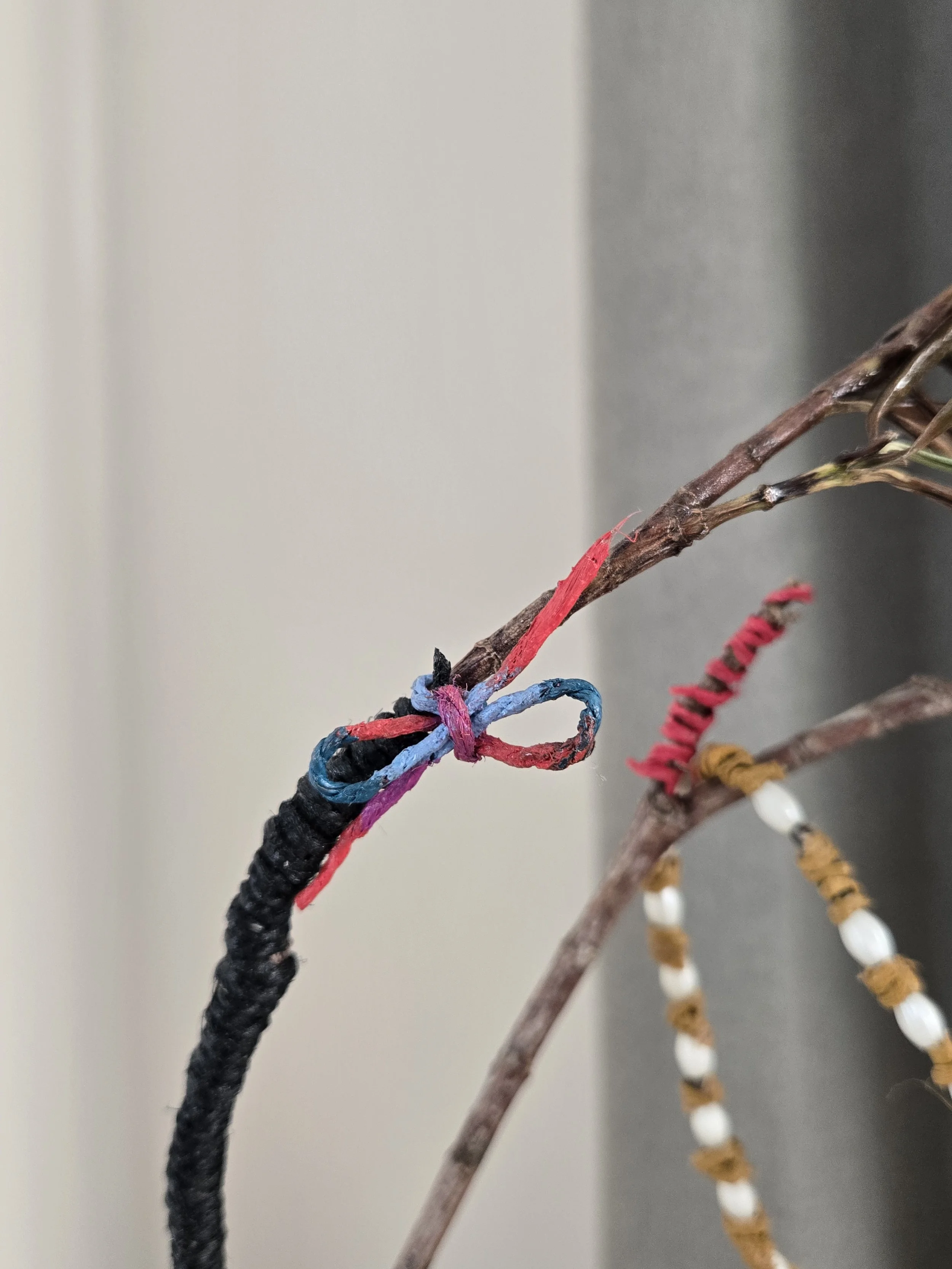
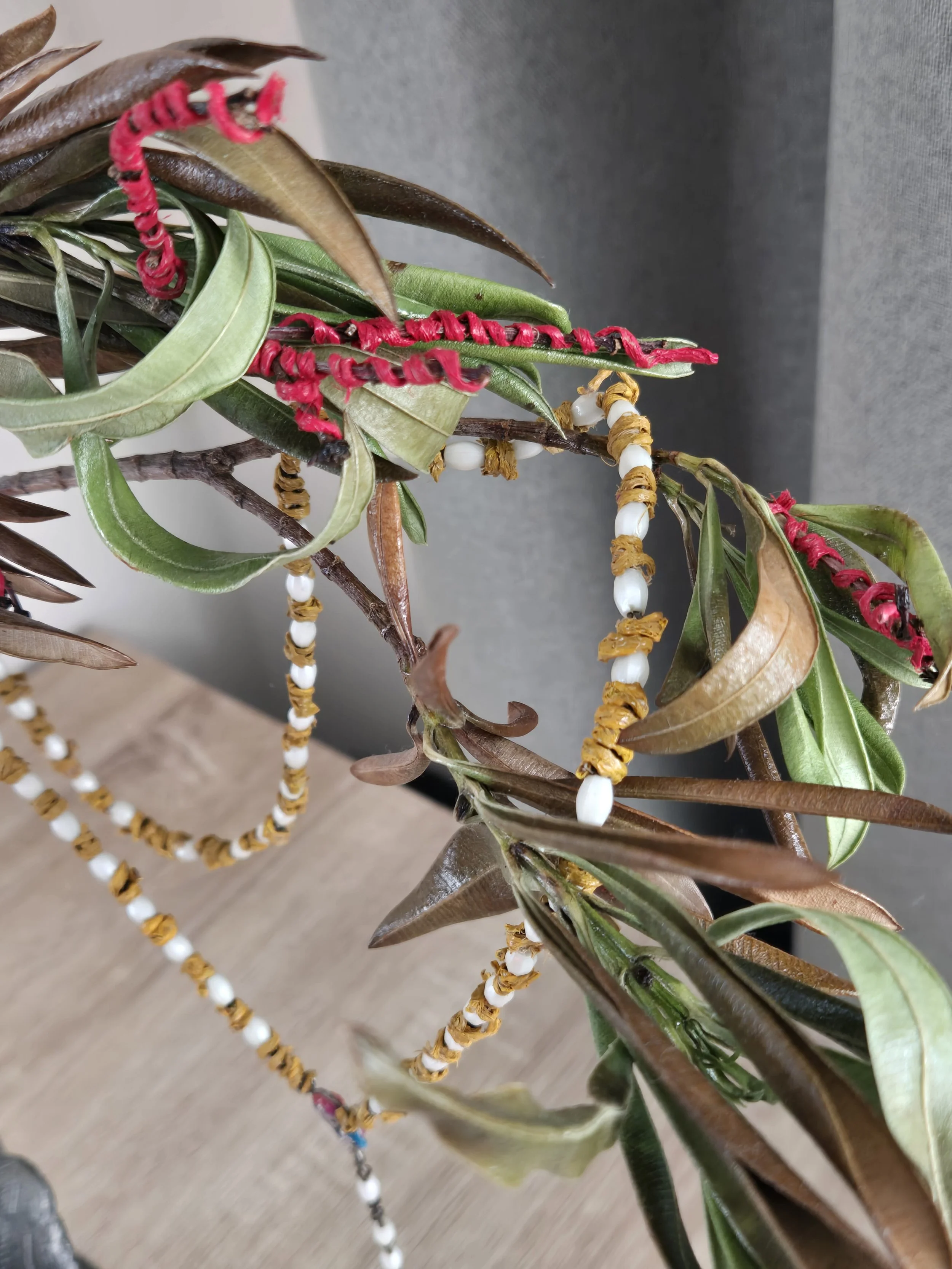
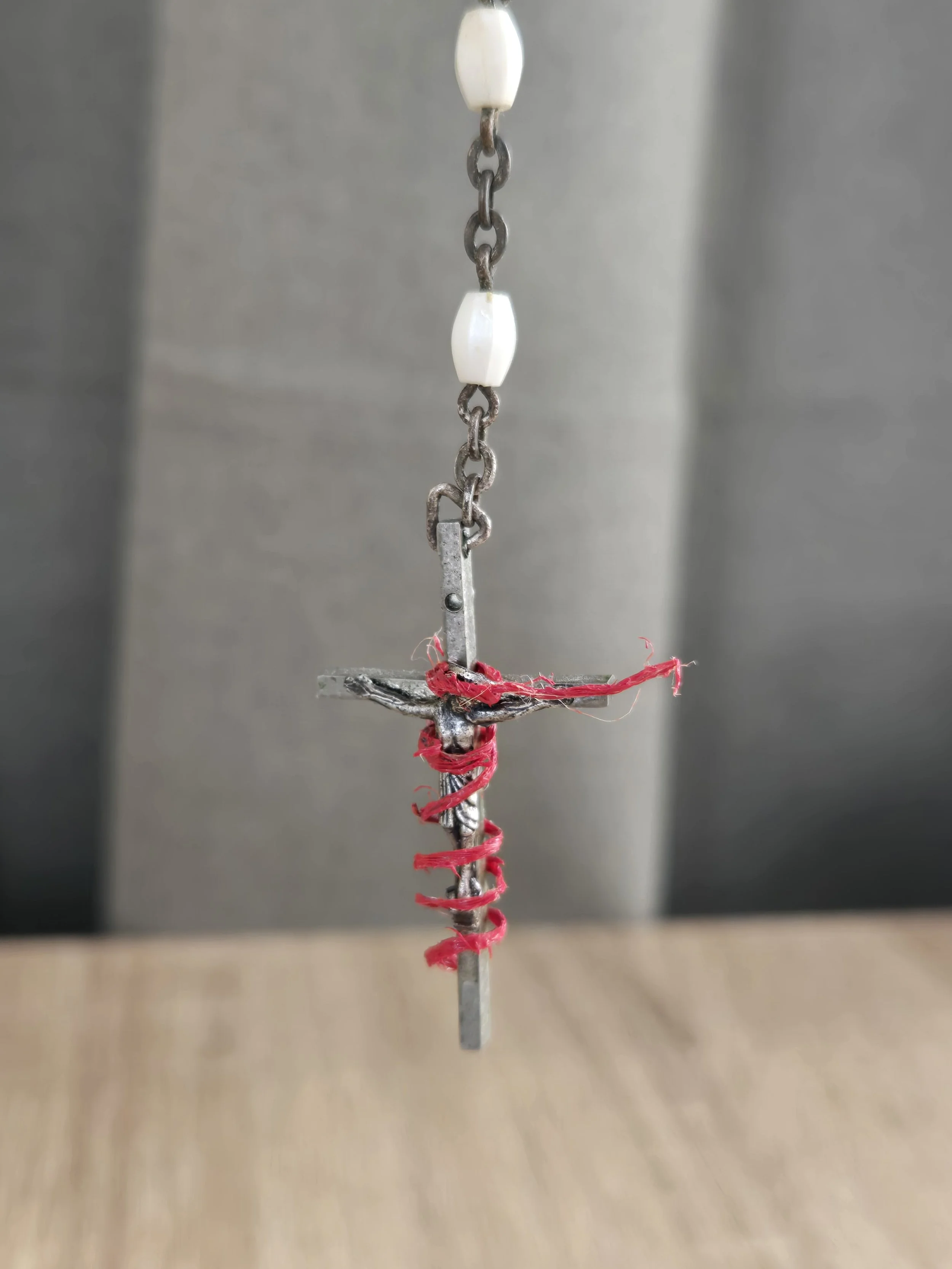
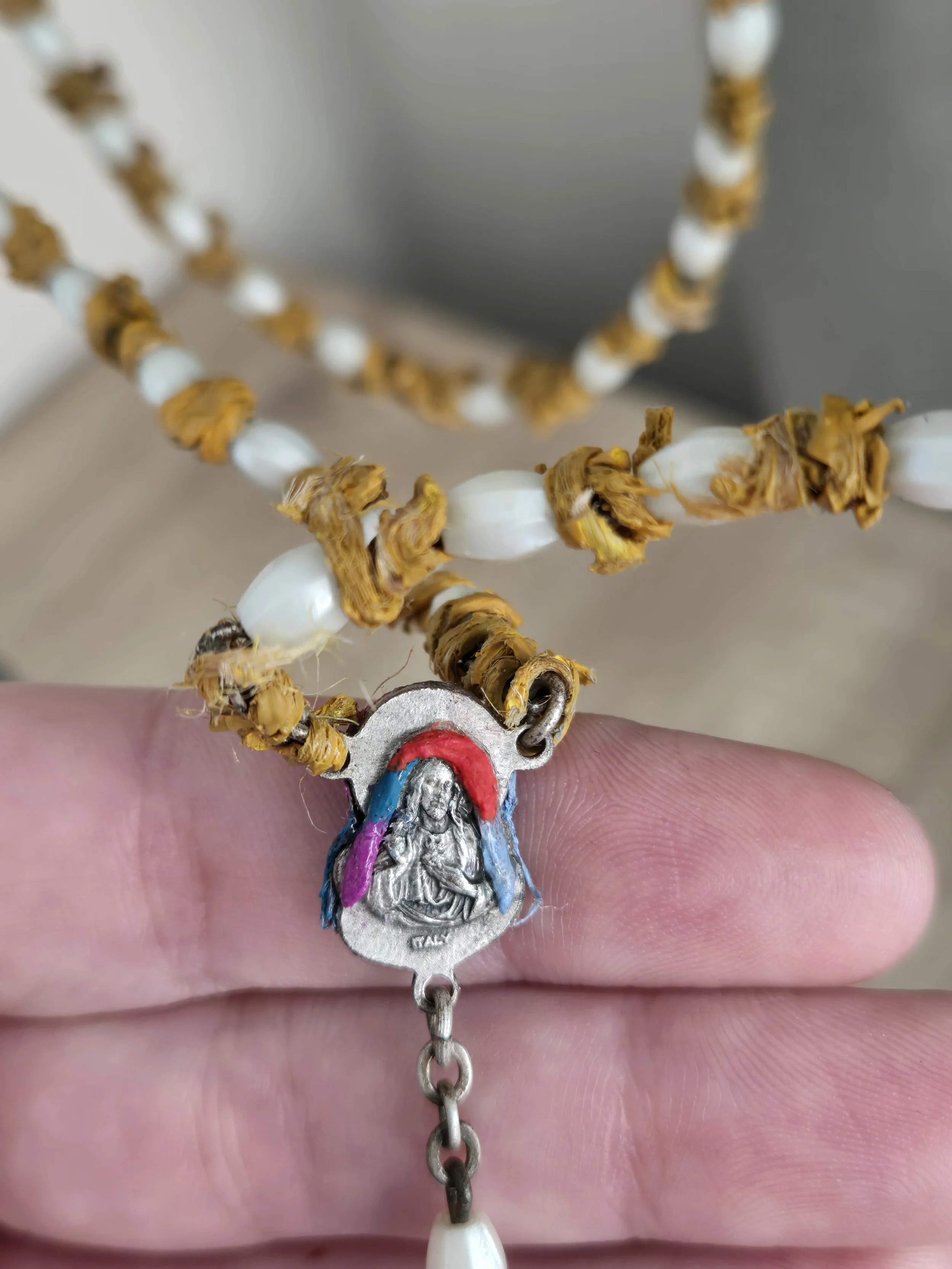
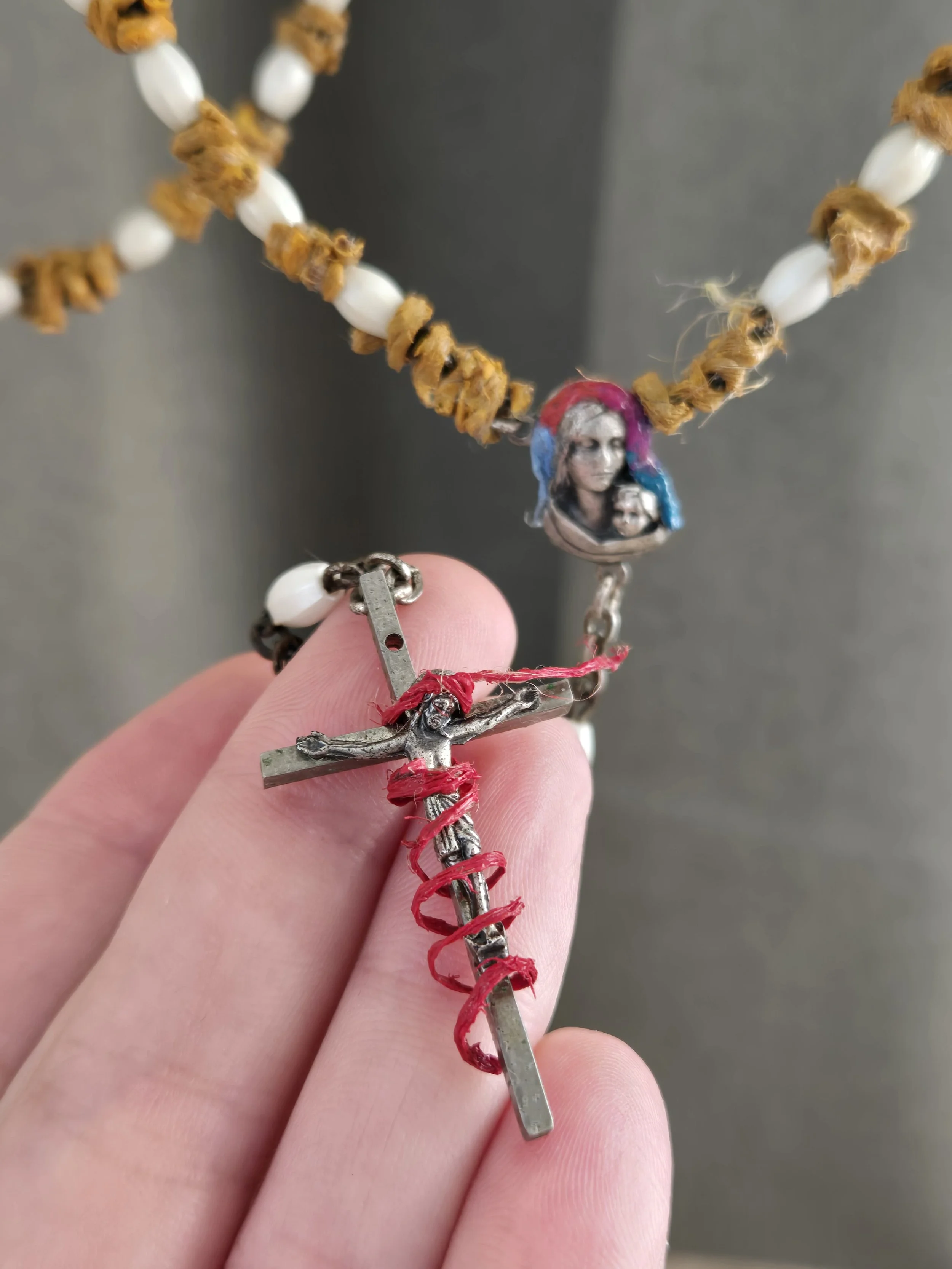
A rosary, wrapped in Naples yellow twine for hope, bears a medallion of caregiver and child on one side, Jesus blessing on the other, their halos replaced with multicolored string. The crucifix below shows Christ bound with red twine from crown to ankles. Together, nature and devotion weave grief, endurance, and renewal across generations.
Medium
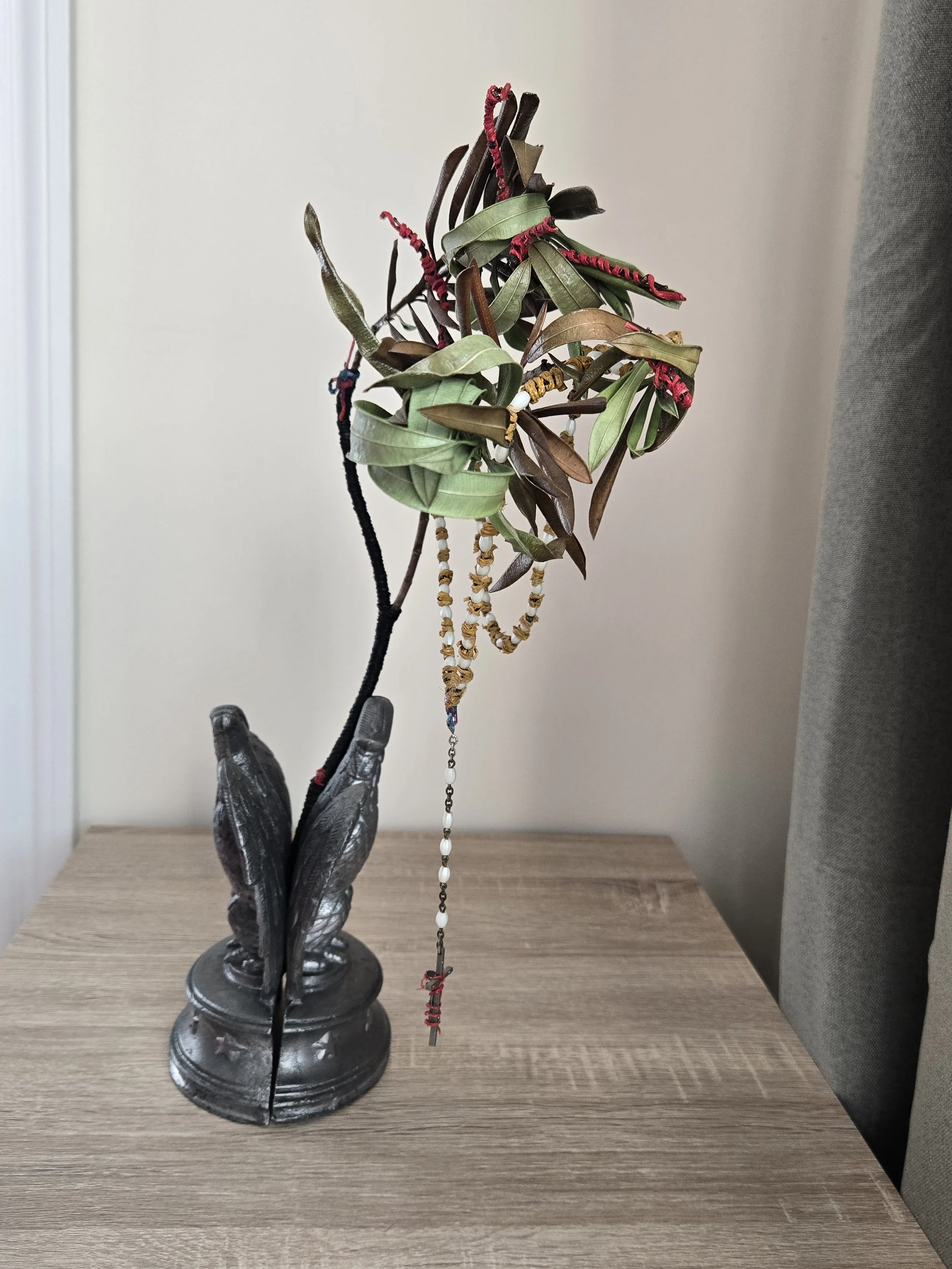
One tree stick, metal bookends, hand painted twine, aged acrylic paint, metal rosary with beads, and organic varnish.
Year
2025
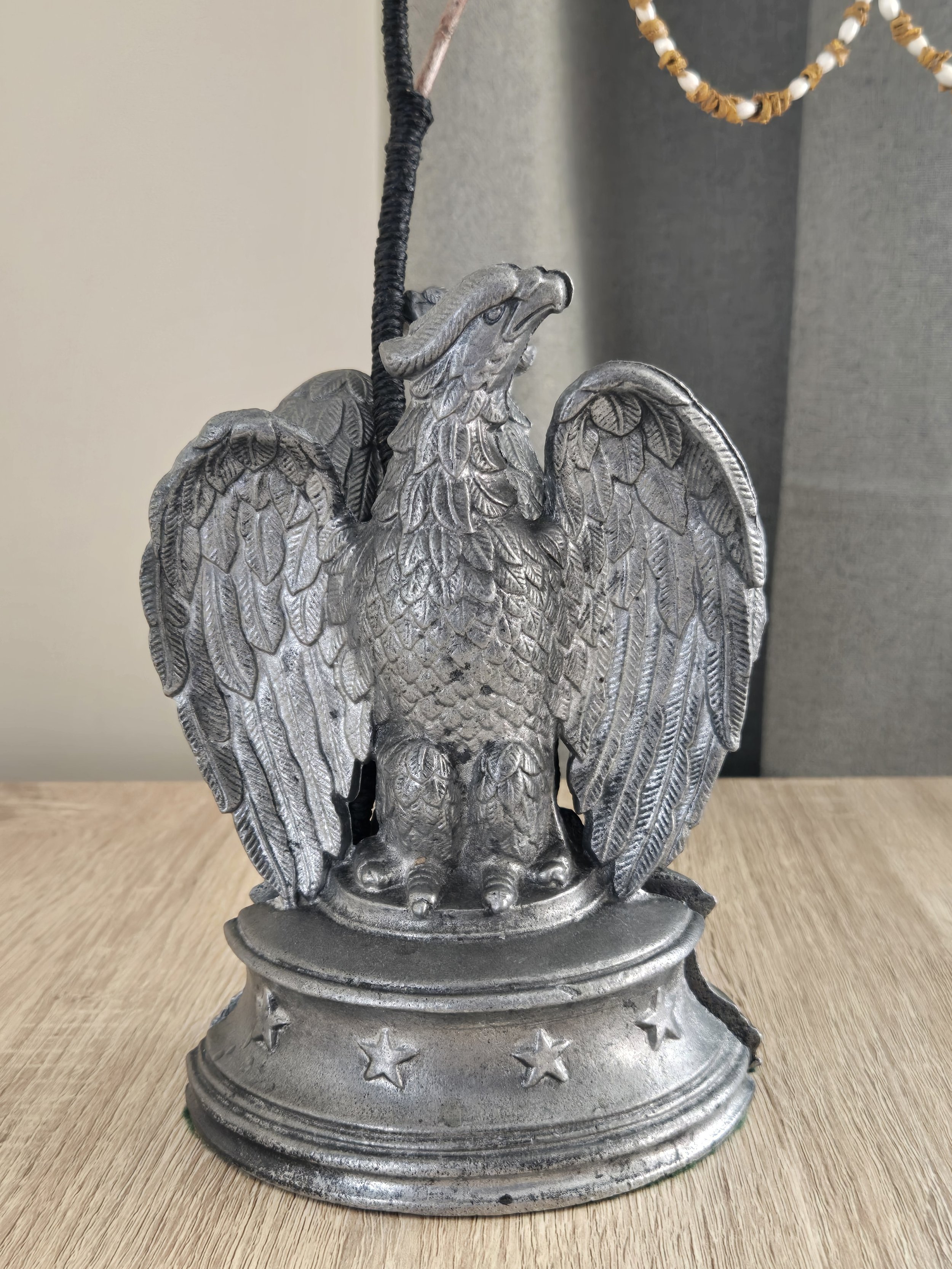
A tree stick from Ocracoke Island, North Carolina, rises between silver bald eagle bookends— draped with a rosary. Black twine signals mourning, multicolored twine humanity, and red twine shields new sprouts with power.
Grandmother Earth
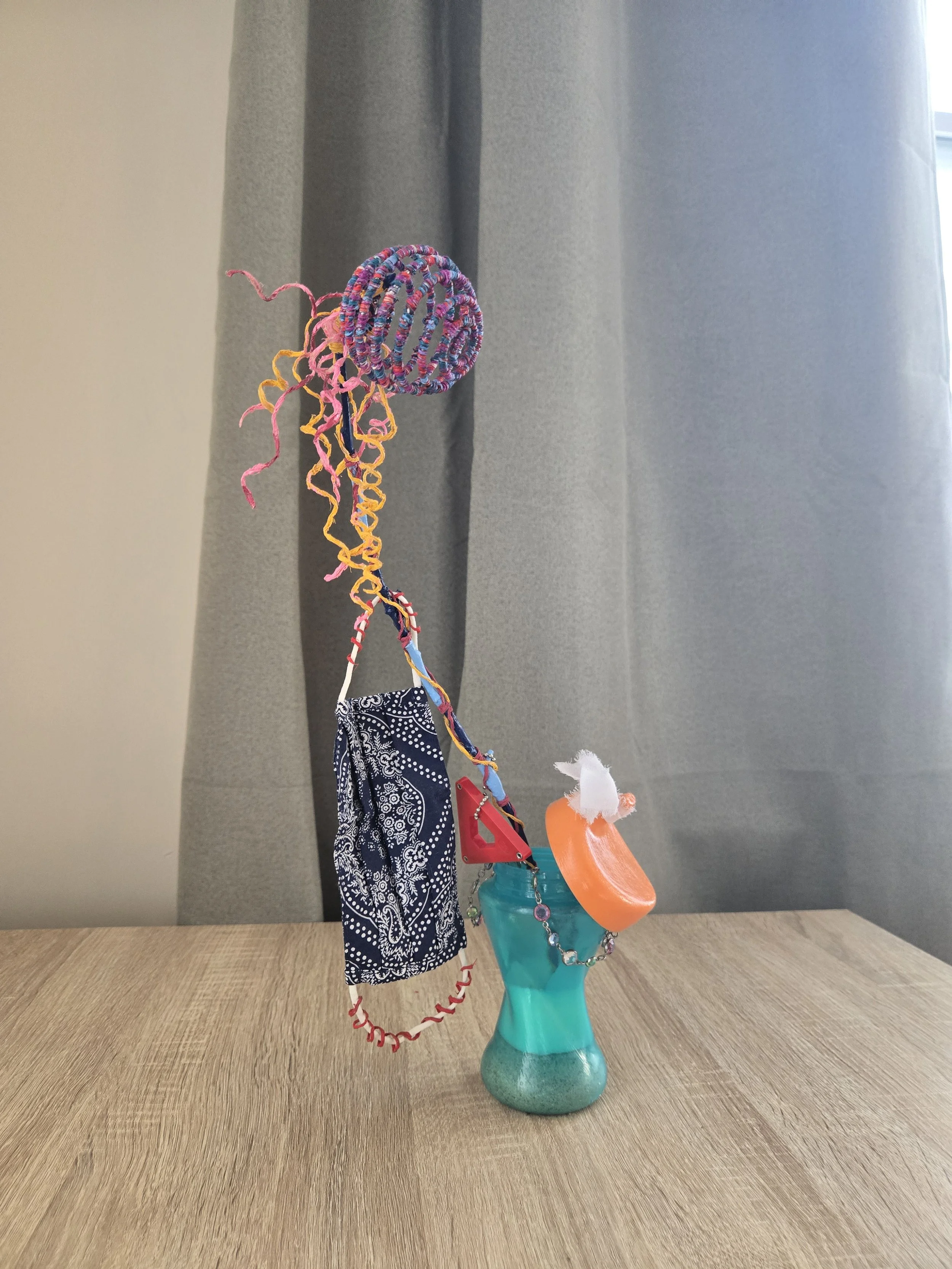
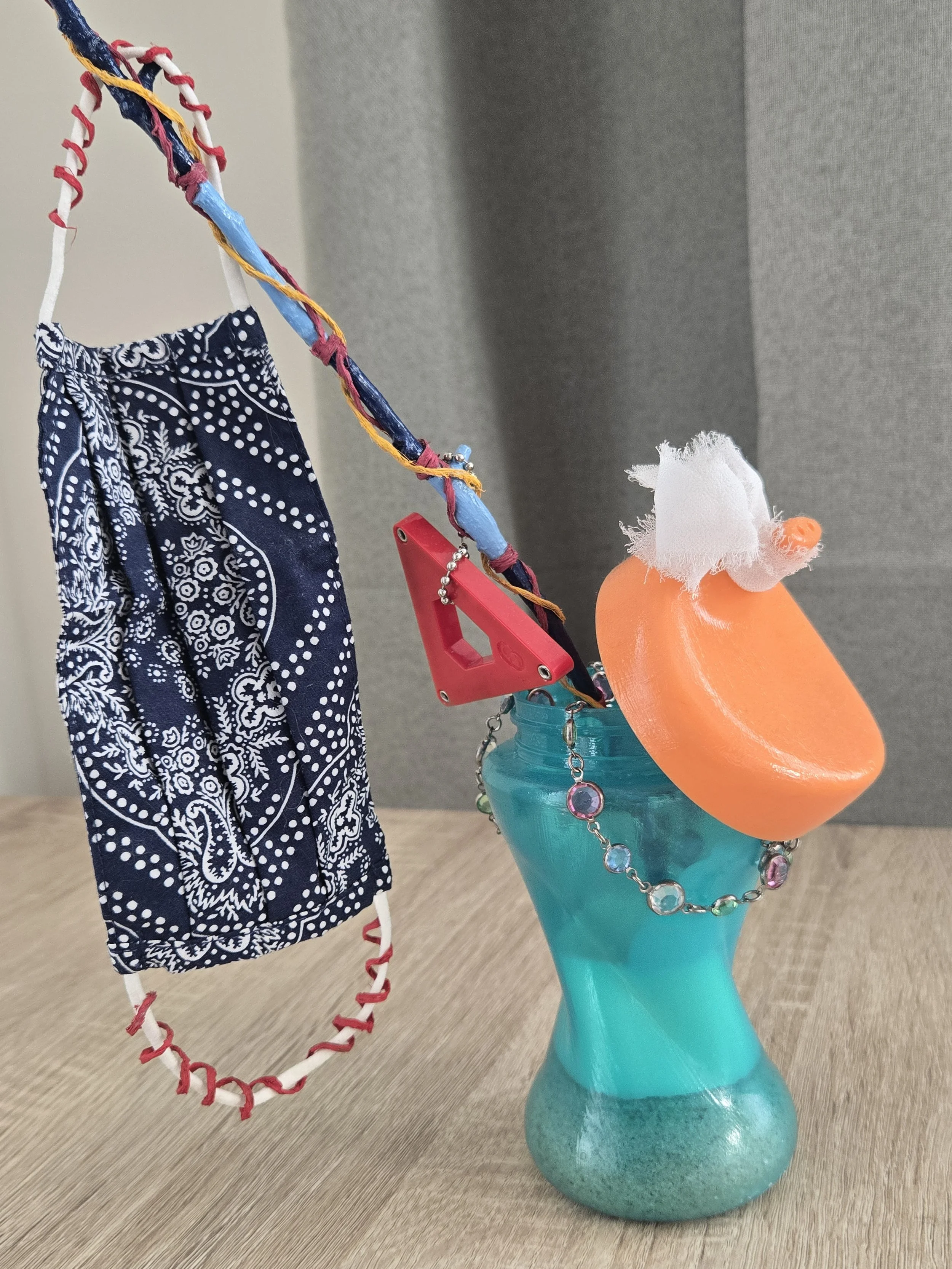
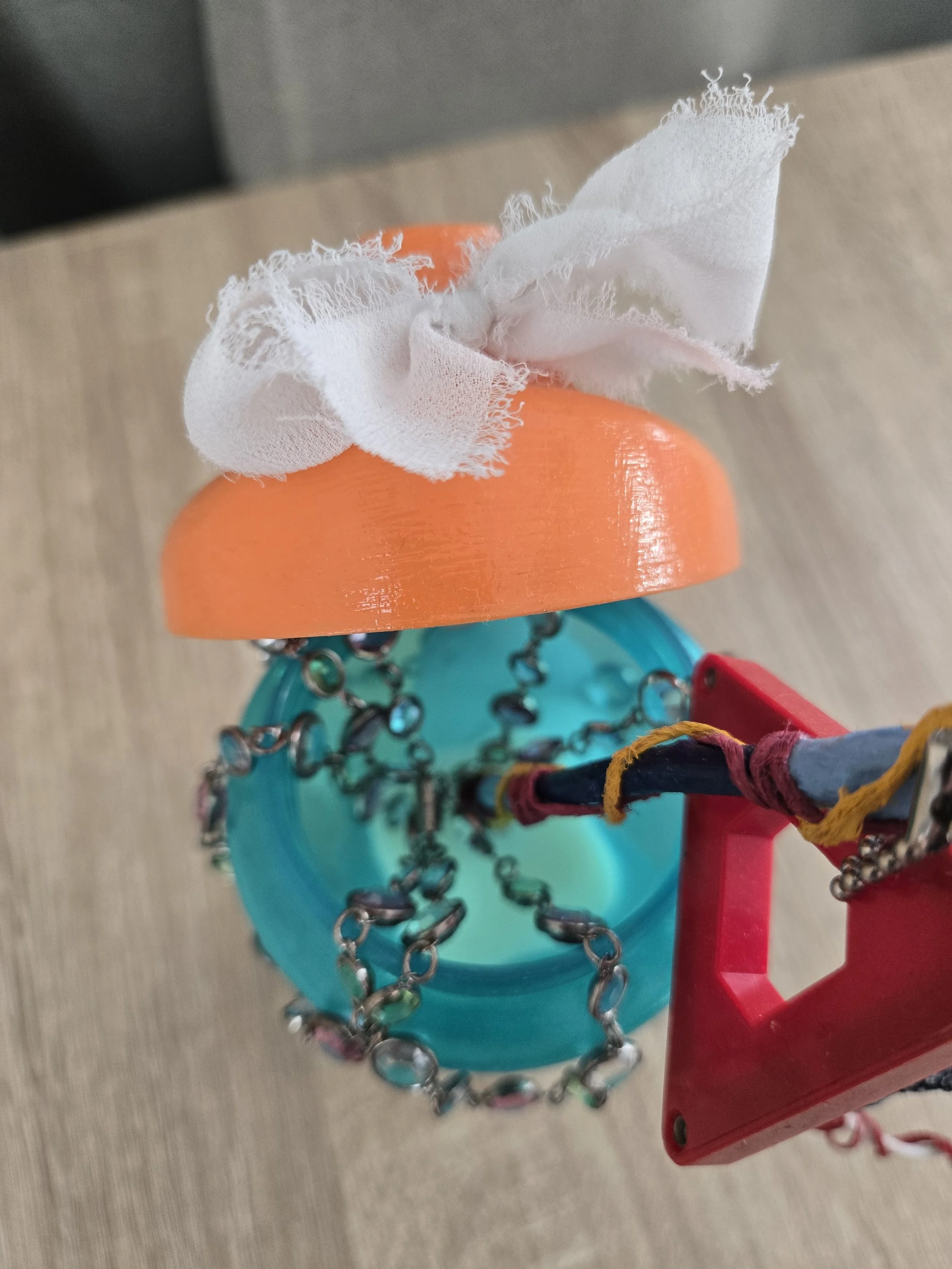
A repurposed children’s cup becomes a vessel of memory and care, its interior quartered with Spring Lake beach sand and reclaimed white soy wax that together anchor an upright branch sourced from Princeton, New Jersey.
Medium
One tree stick, necklace, child’s face mask, child’s cup, child’s magnetic tile, metal link, spring sphere, beach sand, soy wax, twine, gauze, aged acrylic paint, and organic varnish.
Year
2025
The cup’s loose lid and linen bow at the spout suggest domestic ritual unsettled, while an heirloom necklace—from Lindsey’s grandmother—drapes the rim, binding family history to found matter.
The branch’s bark, aged with acrylic and hand-painted string, culminates in a salvaged spring at its apex; from its arms hang a child’s face mask and a magnetic toy, each rewrapped and recontextualized with painted string and chain to register protection, play, and the fragile mechanics of care. The work stages a quiet tension between nurture and neglect, childhood and ancestry, and the ecological logic of reuse.
Humans Remain
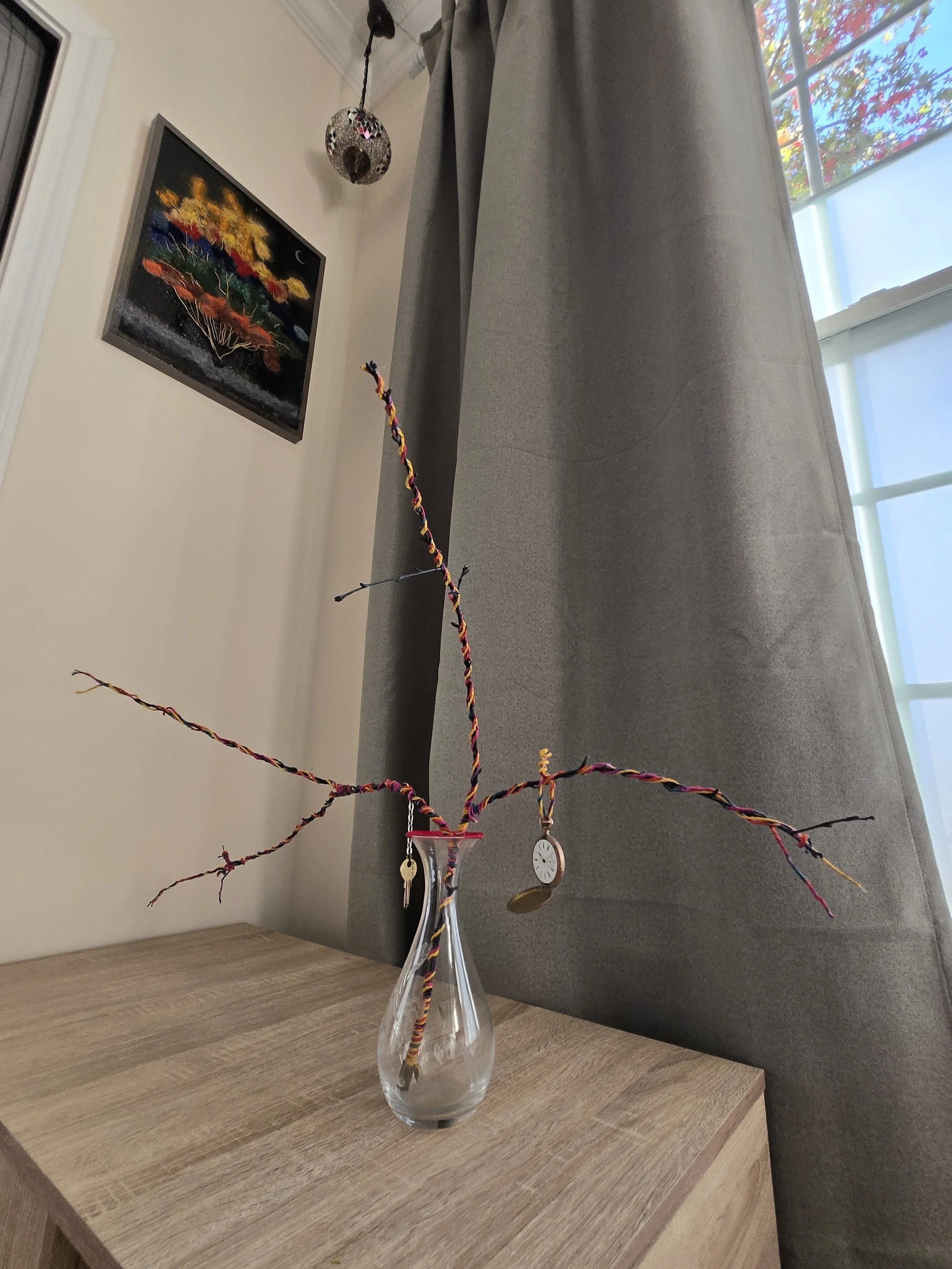
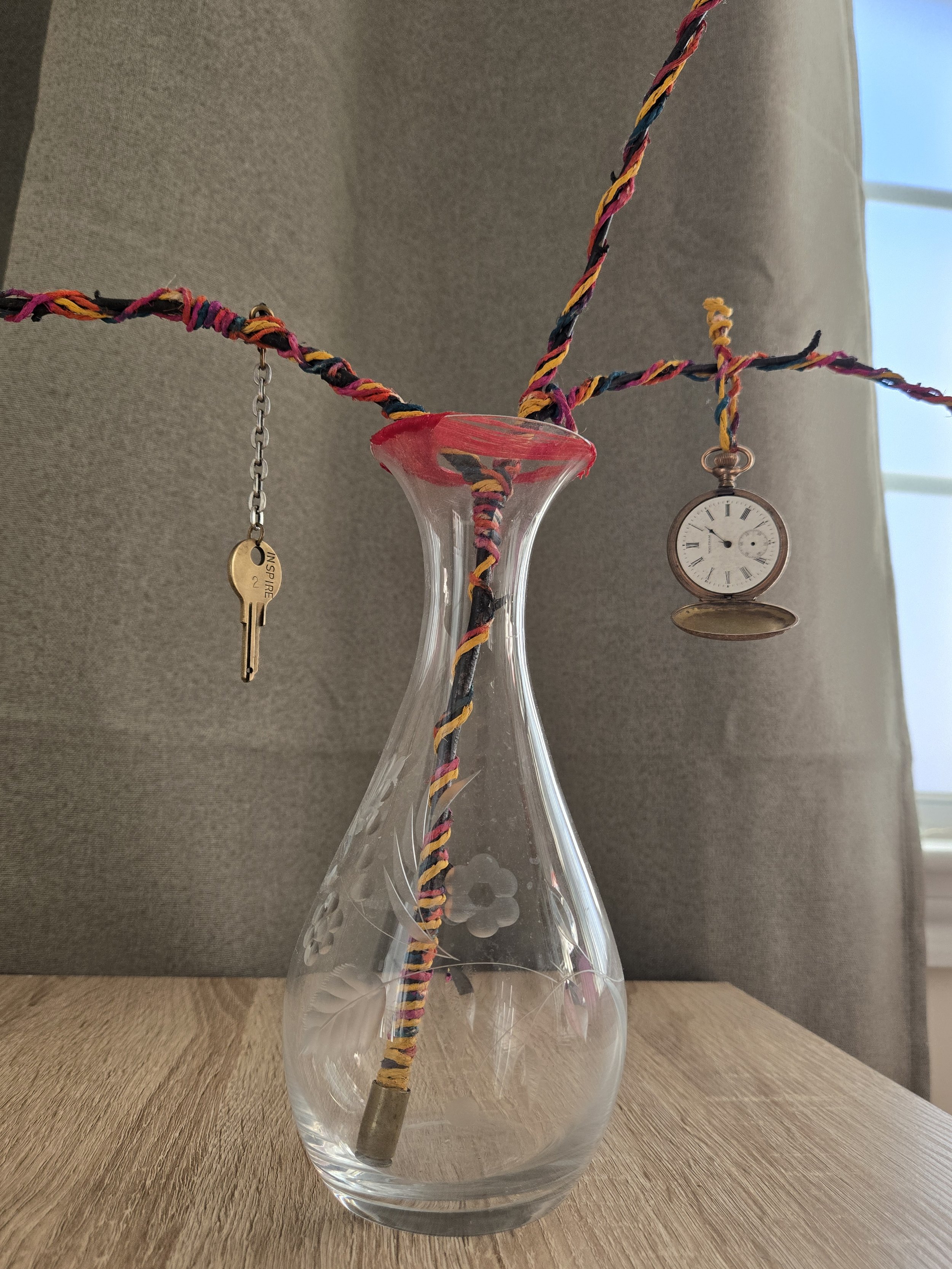
"Humans Remain" suggests the human race remains bound to nature in a critical balance of hope, power, inspiration, time constructs, and weaponry.
Medium
One tree stick, string, aged acrylic paint, key bracelet, broken pocket watch, vase, and one bullet shell.
Year
2025
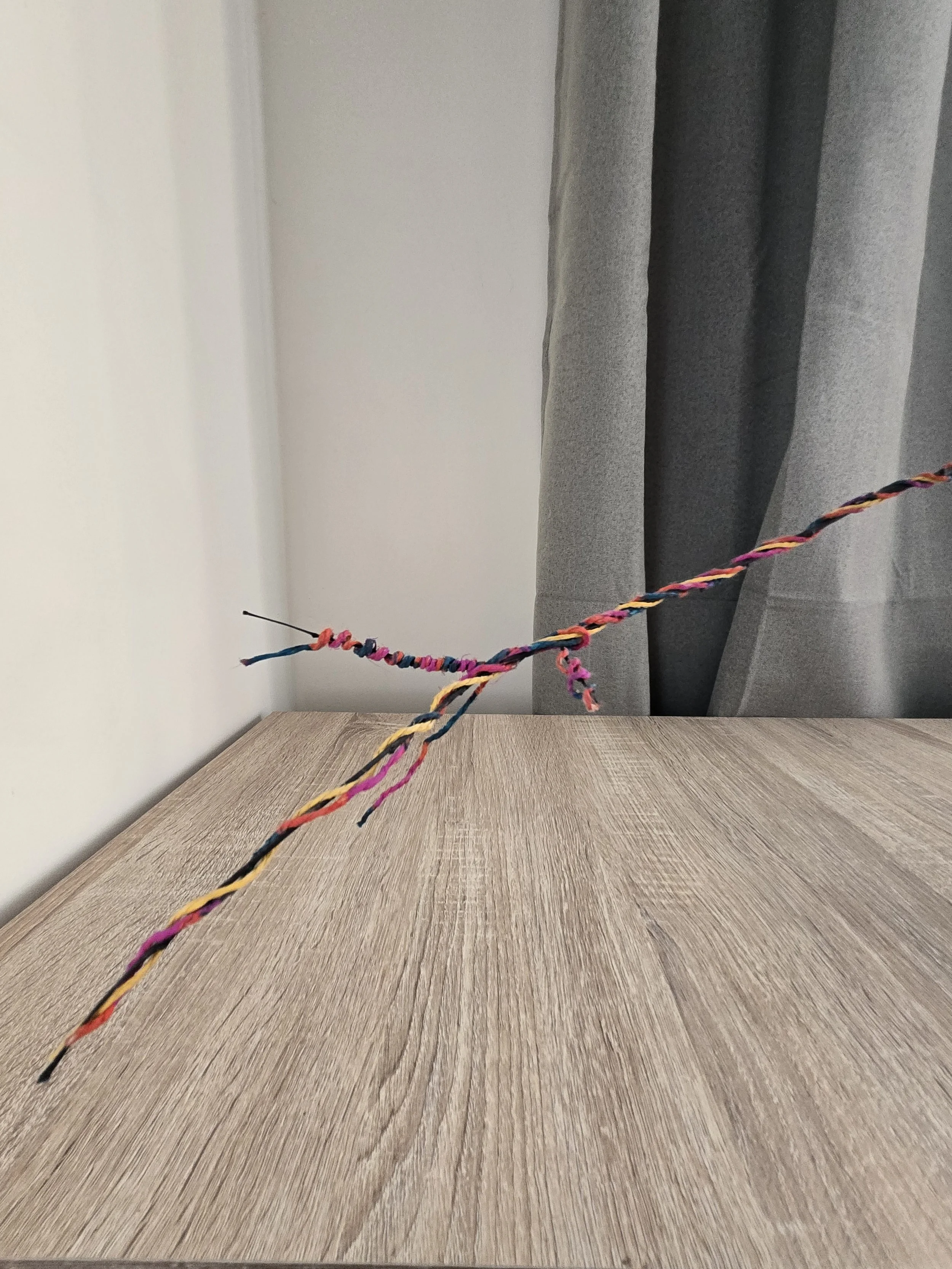

Glow Stick
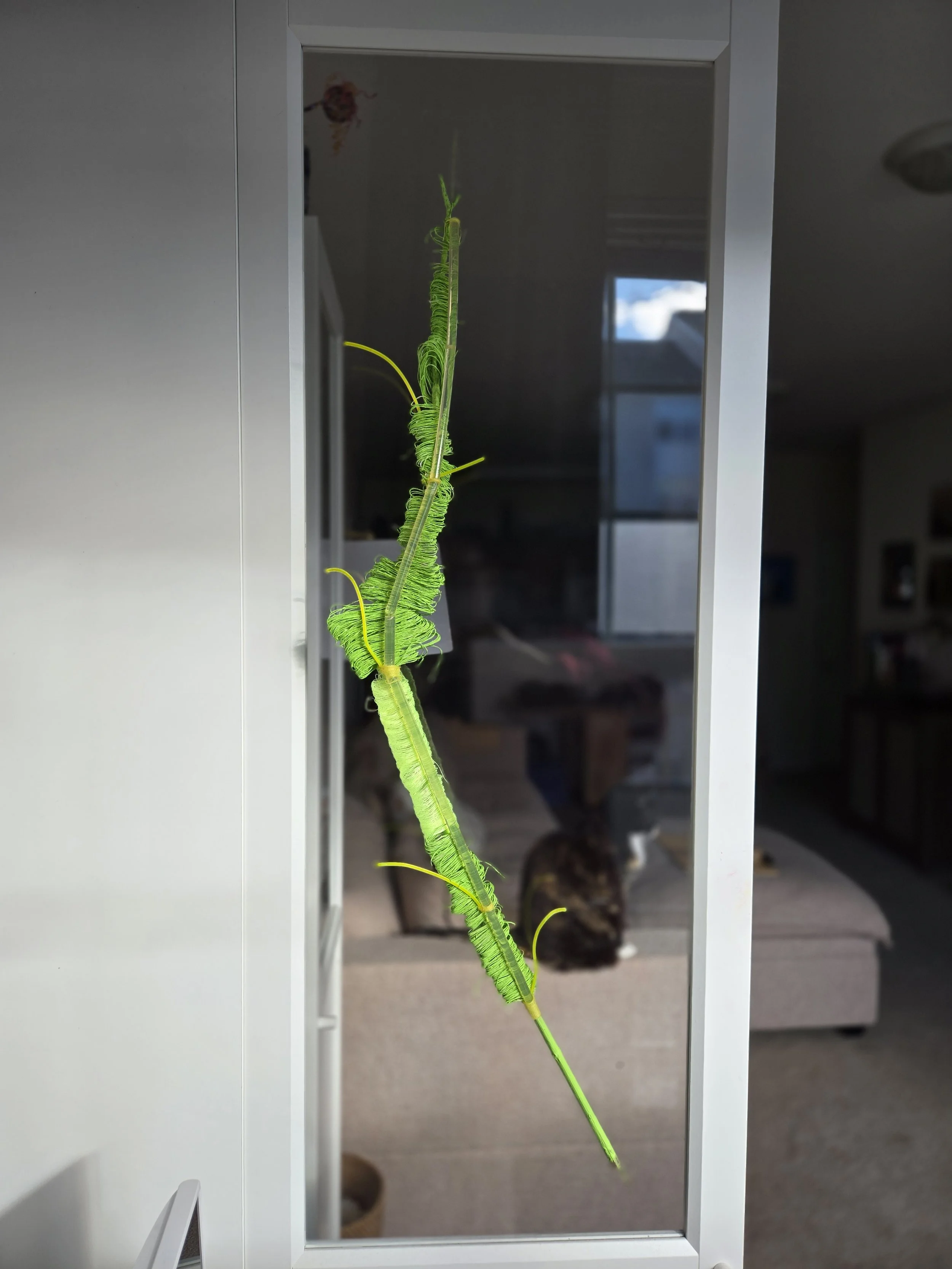
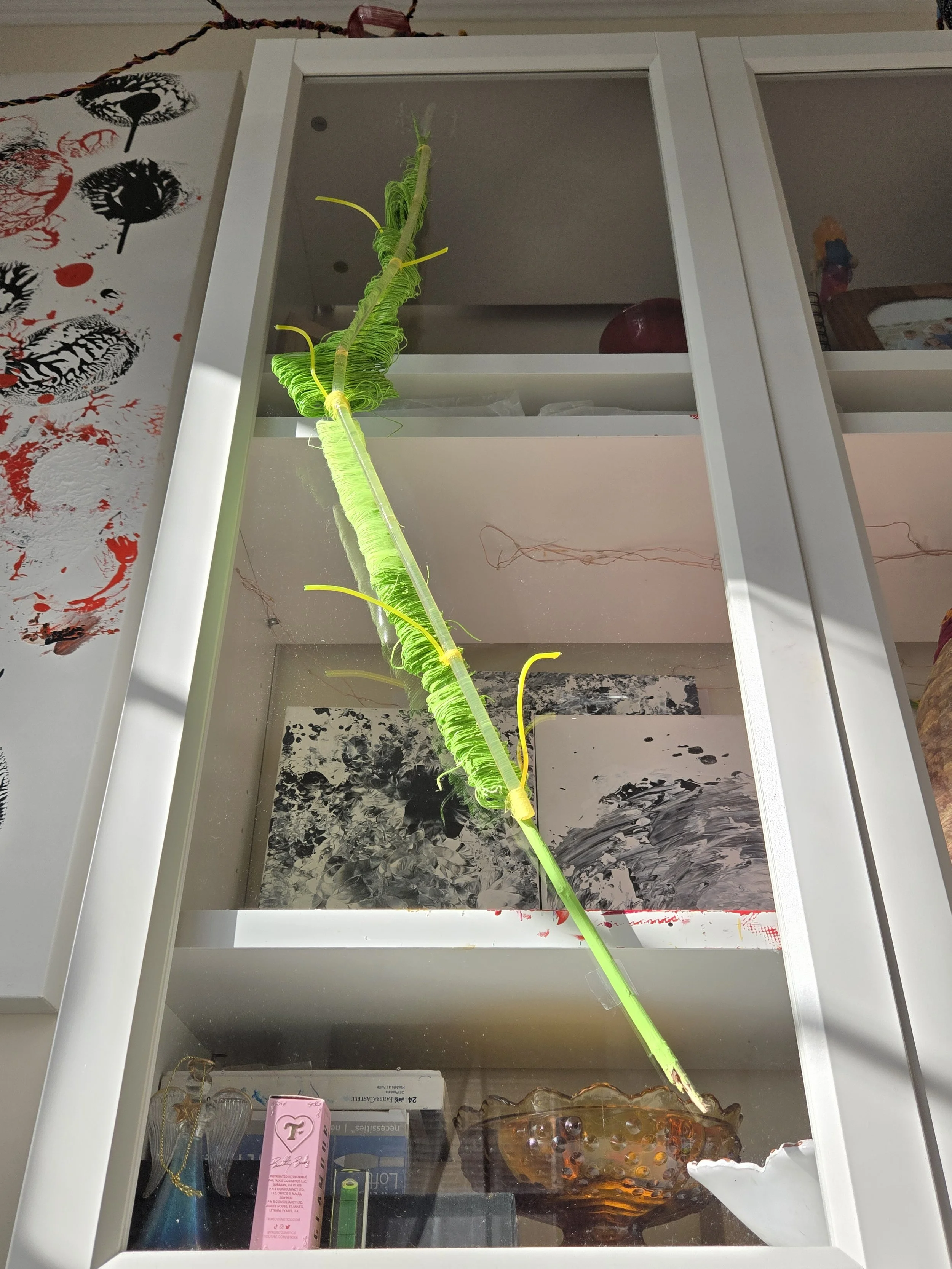
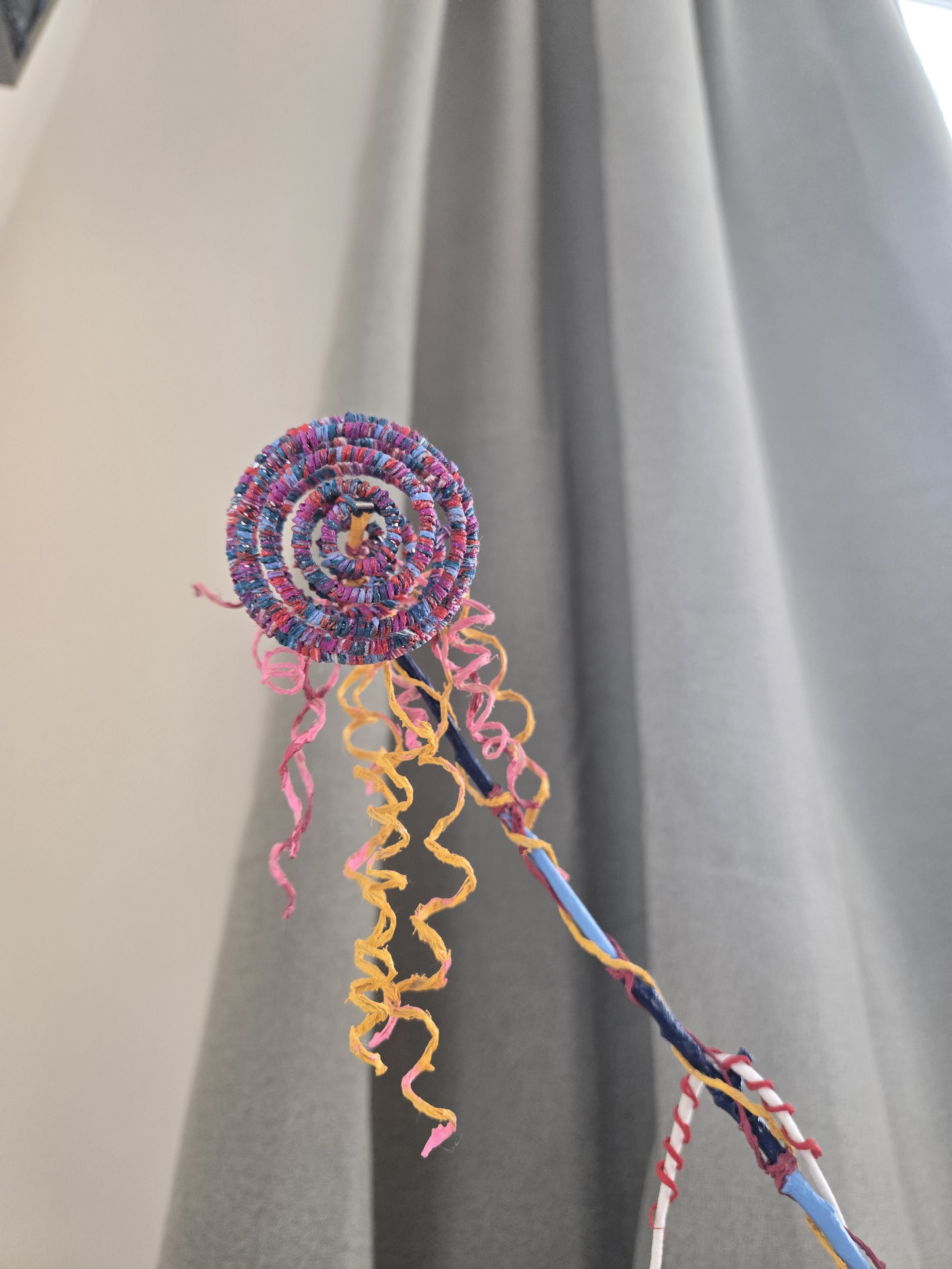
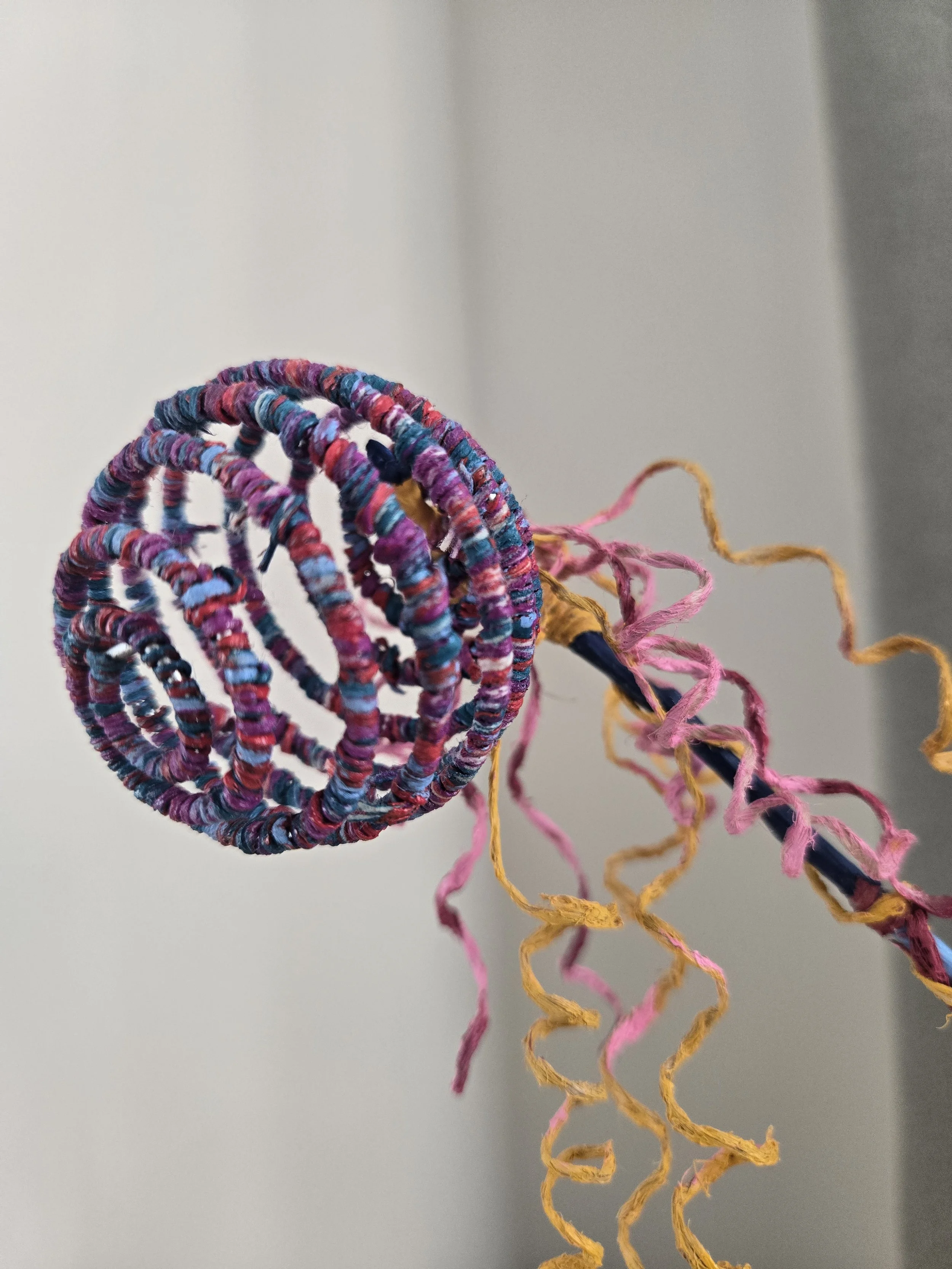
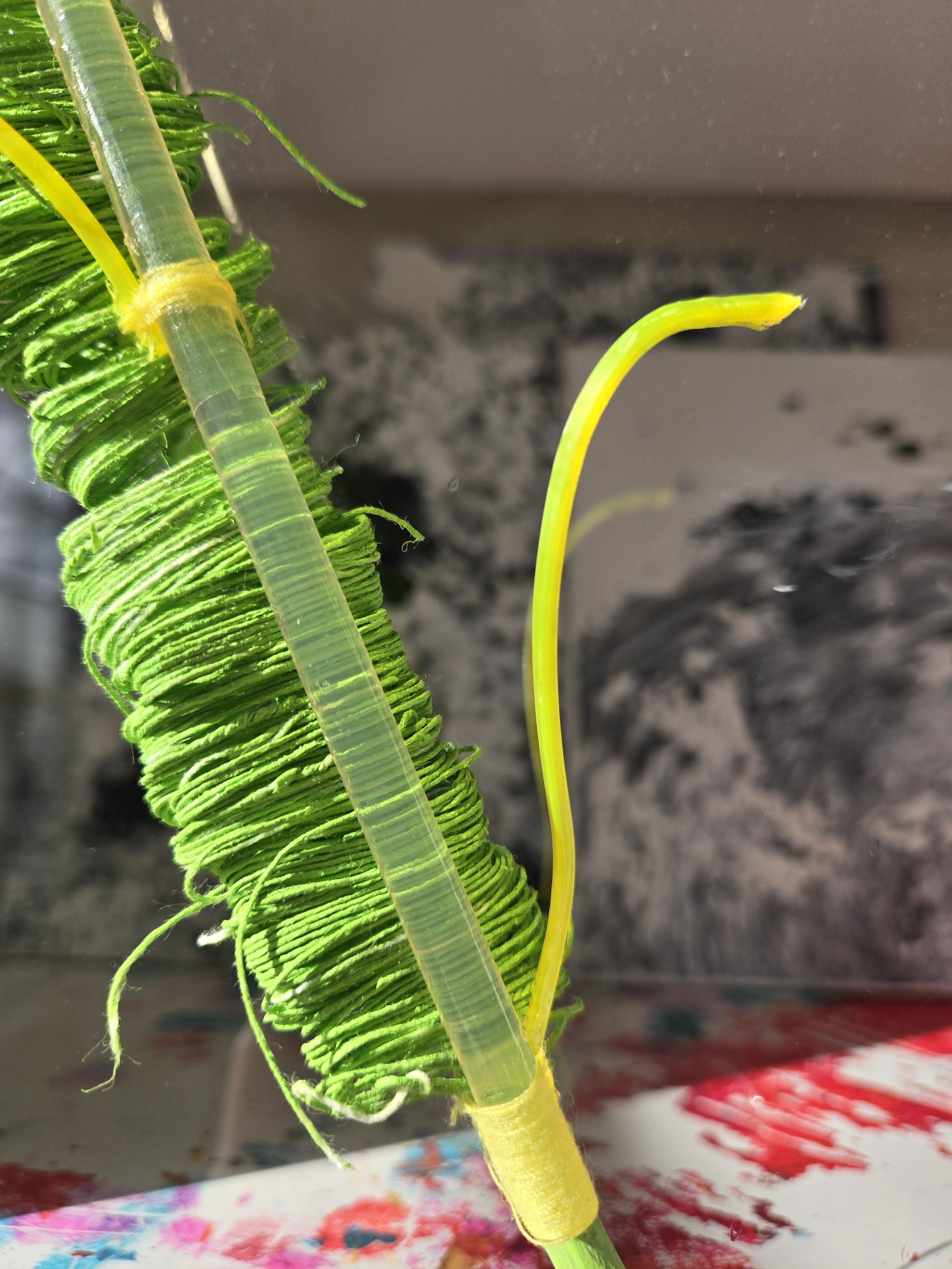
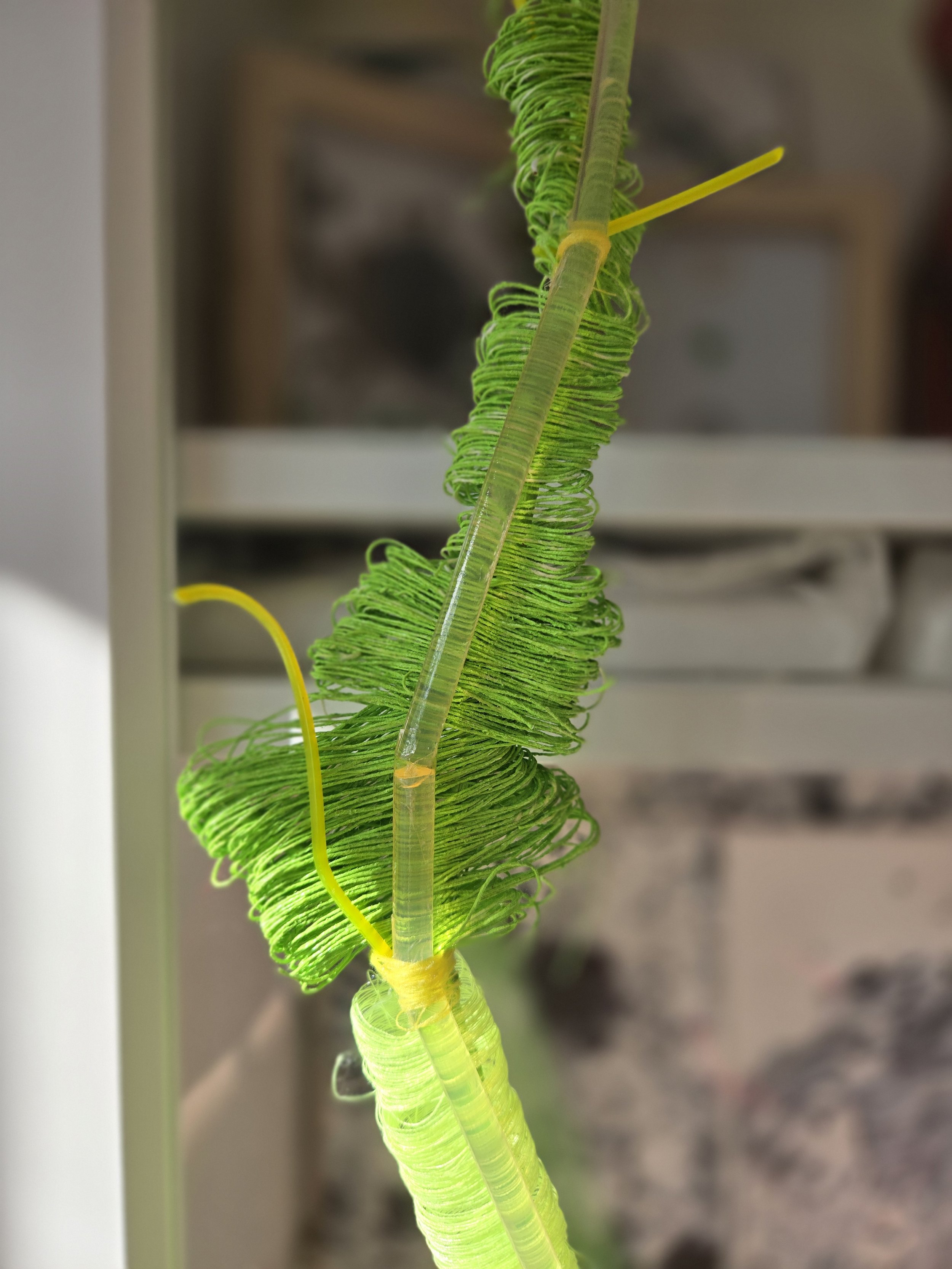
This piece is an exploration of nature altered by human intervention, tension between organic and synthetic forms, and the persistence of growth despite constraint. The tree stick is the only fully organic element, yet it’s painted, bound, and extended by synthetic materials. This creates a layered metaphor. The materials work together to suggest a living structure that has been augmented, engineered, or coaxed into new growth patterns.
Medium
One tree stick, hot glue sticks, weed whip line, aged acrylic paint, hand painted string, thread, and organic varnish.
Year
2026
The piece presents an organic branch as the originating structure for a system of fabricated growth, where painted surfaces, synthetic extensions, and connective threads merge into a single hybrid organism. The branch’s natural form is altered by rigid synthetic lines, producing a visual language defined by augmentation rather than organic growth. Through this interplay, the work reflects on nature as a site of engineered expansion—an ecology in which human intervention extends, reshapes, and ultimately blurs the boundary between what is grown and what is constructed.
La Naturaleza Humana
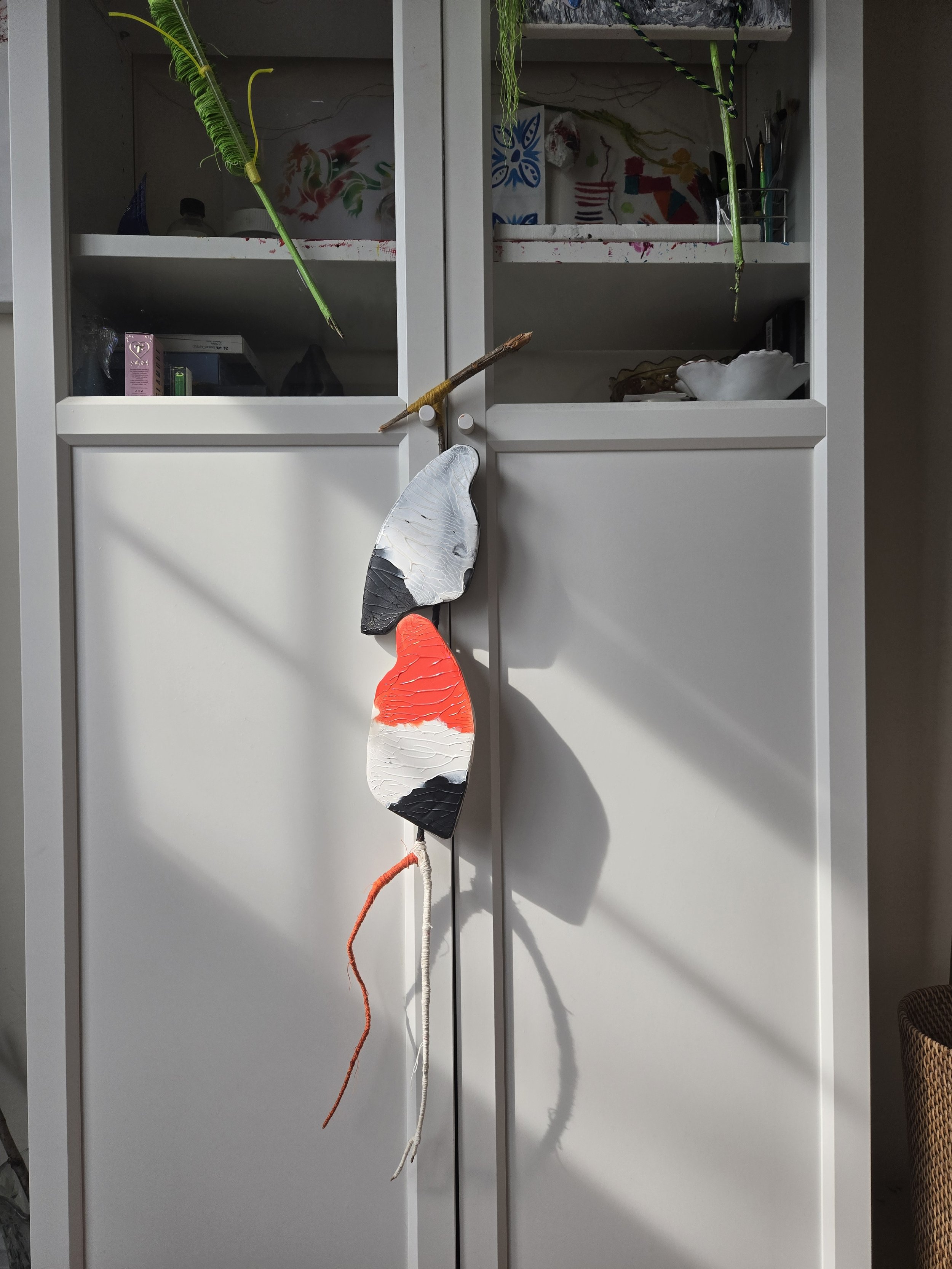
The suspended branch and sculpted lungs form a single, vulnerable body in which respiration is externalized and made visible, transforming a fallen natural fragment into a figure caught between vitality and decline. Wrapped threads create a layered skin that both binds and protects, while the painted clay lungs—rendered in stark whites, blacks, and cadmium tones—introduce an anatomical presence that anchors the work in themes of breath, fragility, and environmental strain. Melted blue pastel fuses lungs to branch, a tenuous connective tissue, emphasizing the precarity of sustaining life once separated from its original ecosystem.
Displayed hanging, the piece evokes a suspended organism whose survival depends on delicate, improvised supports, offering a meditation on the interdependence of body and environment and the fragile systems that hold them together.
Medium
One tree stick, thread, repurposed string, air dry clay, acrylic paint, melted pastel, organic varnish.
Year
2026
Things On The Line
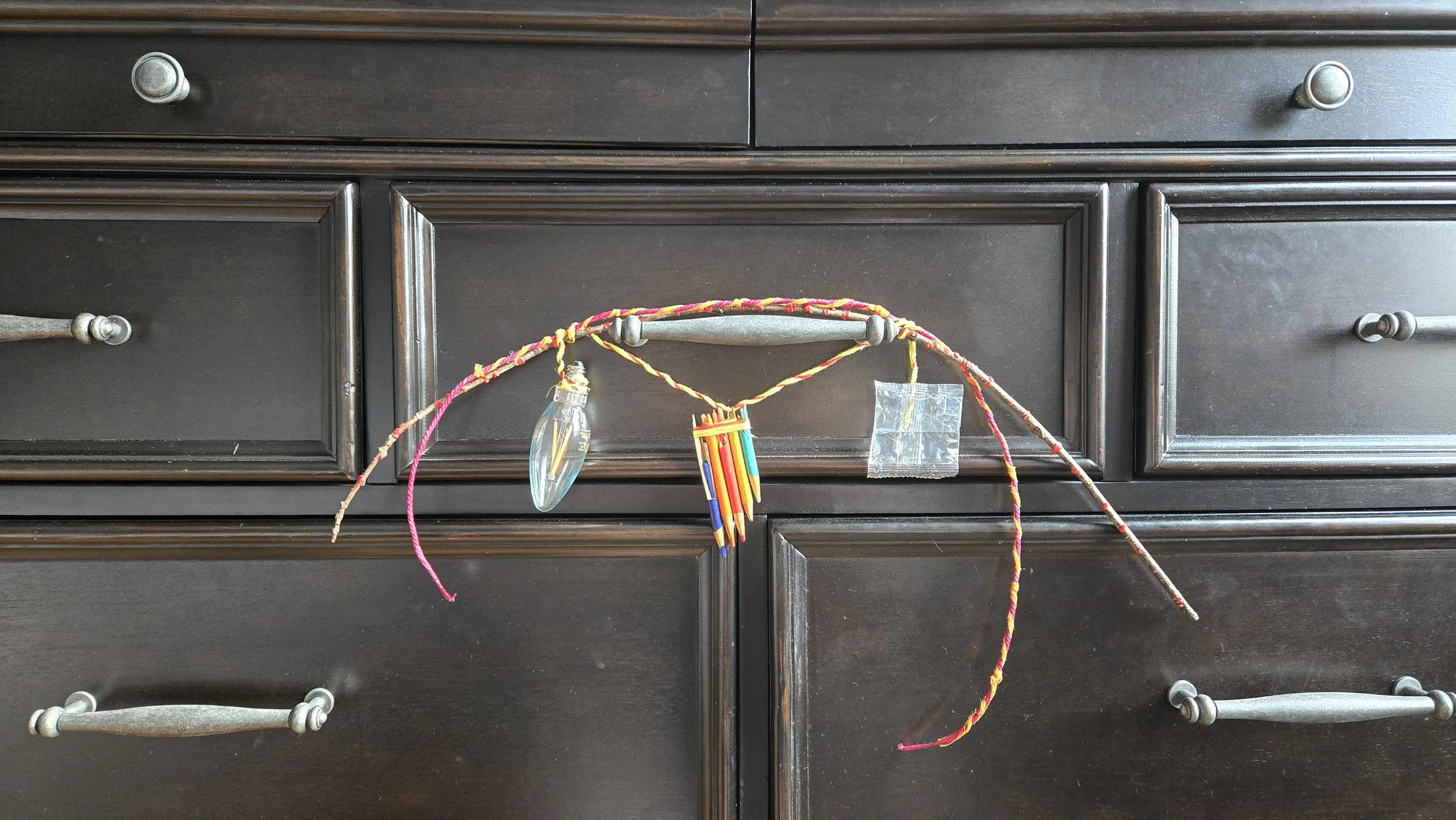

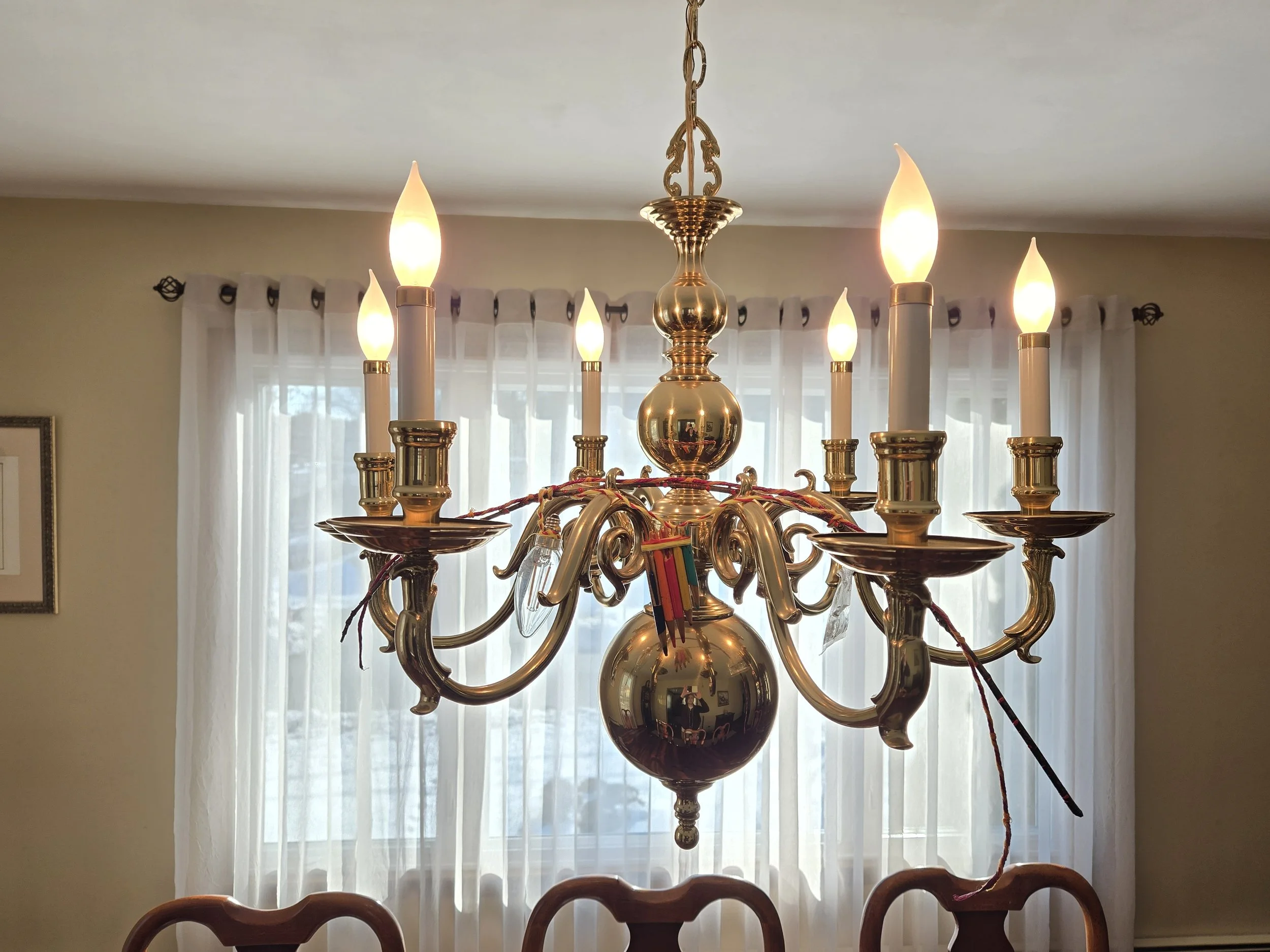
Things On The Line presents the tree stick as a charged spine carrying three suspended necessities—ideas, social equity, and nourishment—each rendered fragile through their makeshift construction and dependence on a single supporting line. Melted cadmium crayon partially conceals and partially reveals the bark, marking the natural form with traces of life, while the painted string reinforced with yellow thread creates a patterned sheath that serves as an improvised circulatory system. Beneath it, the neon green and red line functions like a powerful, fabricated connection from which the three objects dangle: an unlit lightbulb suggesting dormant potential, a sequence of broken pencils bound in order as remnants of fractured learning, and a taped pouch of water acting as a precarious reservoir. Together, these elements form a suspended ecology in which energy, intellect, and sustenance coexist in a state of tension, held aloft by a single, vulnerable structure that underscores the delicate systems on which survival depends.
Medium
One tree stick, string, thread, pencils, lightbulb, tap water, plastic pouch, transparent tape, melted crayon, and organic varnish.
Year
2026